THE BUYER'S GUIDE / CALIFORNIA
Sell Switchgear With Buyer-Handled Rigging in California
Plan the Equipment Review First
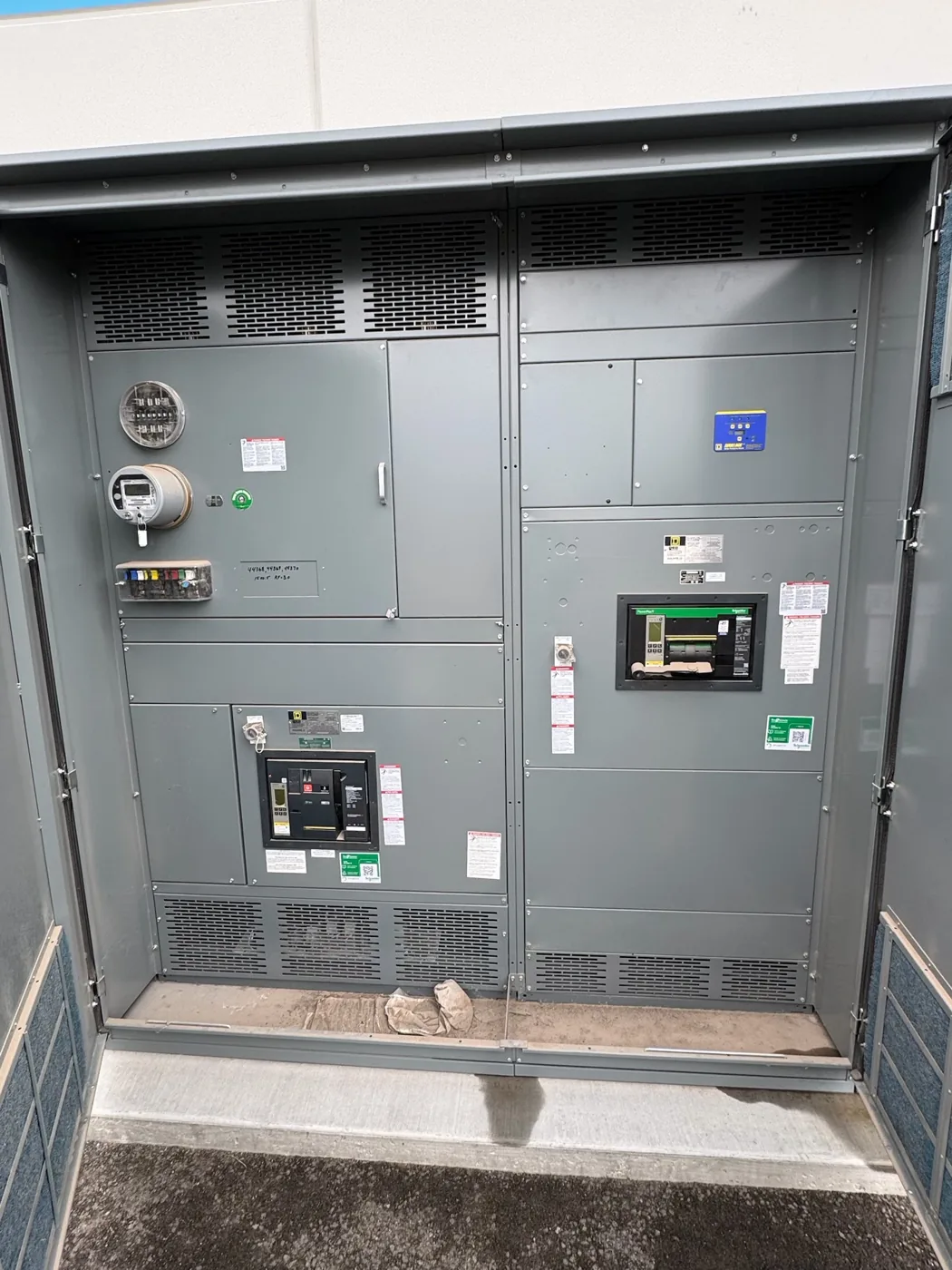
A facility change can leave switchgear in place after its original purpose has ended. If you are considering whether to sell switchgear with buyer-handled rigging in California, begin by describing the equipment and its setting rather than arranging removal. The buyer reviews the information to decide whether to make an offer and how a potential collection could be planned.
Switchgear may be a single lineup, several connected sections, or equipment stored separately after a project. Share what you know about its general configuration, approximate quantity, and whether it remains installed or has already been removed. A clear description helps distinguish one group of equipment from another without requiring you to inspect hidden components or disturb the installation.
Rigging is a practical part of collecting large electrical equipment, but it is not a separate service offered to the seller. If a purchase is agreed, the buyer handles and pays for crane work, rigging, electrical disconnects, loading, freight, and hauling. The seller’s role is to provide useful information and, after agreement, get paid.
Describe the Gear Safely
For an initial review, share any equipment identification already available, such as a manufacturer name, model reference, voltage class, or visible nameplate details. Do not guess at missing ratings. These details help the buyer understand what kind of switchgear is being considered, while the condition and configuration provide additional context for evaluating the group.
Existing records can be useful: asset schedules, prior project documents, maintenance notes, or photographs already taken from a safe position. Exterior views or a safely visible nameplate may help identify equipment, but photos are optional. Do not open a cabinet, remove a cover, approach energized equipment, or take a picture if doing so would be unsafe.
No testing is required from the seller. If you know whether the gear was operating before shutdown, stored, incomplete, or affected by a known issue, describe that as information rather than trying to verify it. Electrical work and disconnects belong to qualified personnel following applicable safety procedures; the buyer handles that work if a purchase proceeds.
Explain Rigging Access Conditions
The arrangement around the switchgear can affect how a collection is planned. Describe known obstructions, overhead restrictions, narrow passages, stairs, doorways, or other access limits only if that information is readily available. The purpose is to help the buyer assess the practical handling question, not to ask you to measure, move, dismantle, or prepare the equipment.
If the gear is installed, say whether it is in an electrical room, production area, or another known part of the facility, and mention any access route information you already have. If it is stored, note whether it is indoors or outdoors when known and whether the pieces are grouped together. Avoid assumptions about lifting points or weight unless existing documentation states them.
Do not arrange a crane, riggers, freight, or electrical disconnects on the buyer’s behalf. After reviewing the equipment and available access details, the buyer can consider the collection requirements as part of a potential purchase. The buyer handles and pays for rigging and related logistics if the purchase is agreed, subject to review of the equipment and collection circumstances.
Share Ownership and Timing
A useful quote request also explains who owns the equipment and whether the person submitting the inquiry can coordinate its sale. If the switchgear is part of a company closure, facility change, or decommissioning, provide the basic context and identify any internal approval still pending. This helps clarify whether the equipment is available for consideration.
Include the California pickup location at a level that allows the buyer to understand where the equipment is located. A facility name or general location may be enough to begin; do not publish sensitive access details in an open setting. If the equipment is part of a larger lot, indicate which sections are included and whether other surplus electrical assets are being considered.
Share any known schedule constraints, such as a planned site transition or an estimated period when access may be possible. Do not promise a collection date or assume that an offer guarantees removal. The buyer must review the equipment and logistics before making a purchase decision. If the purchase is agreed, payment is upfront; an offer alone does not trigger payment.
Request a Quote With Useful Details
To request a quote, describe the switchgear, quantity, known identification, condition, ownership, and pickup location. Add a short explanation of the rigging environment, including visible access limits or obstructions you already know about. Existing exterior photographs or safely visible nameplate images can help, but no image is required, especially where obtaining one could create a safety risk.
Be clear about what is known and what remains uncertain. A straightforward note that a lineup is installed, its labels are partly readable, or its operating history is unavailable is more useful than an unsupported estimate. The buyer can review the information and determine whether to make an offer; no fixed price or eligibility should be assumed before that review.
The business buys used and surplus switchgear across all voltage classes, including equipment from decommissioned data centers and shut-down power plants. Sellers do not need to test the equipment. If a purchase is agreed, payment is upfront, and the buyer handles and pays for crane, rigging, disconnects, loading, freight, and hauling. The seller does nothing but get paid.