THE BUYER'S GUIDE / CALIFORNIA
Sell Switchgear From a Remote California Site
Start With the Equipment and Its Location
Selling switchgear from a remote California site begins with two practical questions: what equipment is available, and where would a collection take place? A clear initial description helps the buyer review the opportunity without asking you to arrange transportation or electrical work. Share the actual pickup location and any known access details rather than relying on a broad regional description.
Identify the lineup, switchboards, or other switchgear you are considering, along with the number of sections or units if known. Safe, visible nameplate details can help distinguish equipment by manufacturer, model, and voltage class. Do not approach energized equipment, remove covers, or open enclosures to obtain information; existing records or safely visible exterior views are enough to begin.
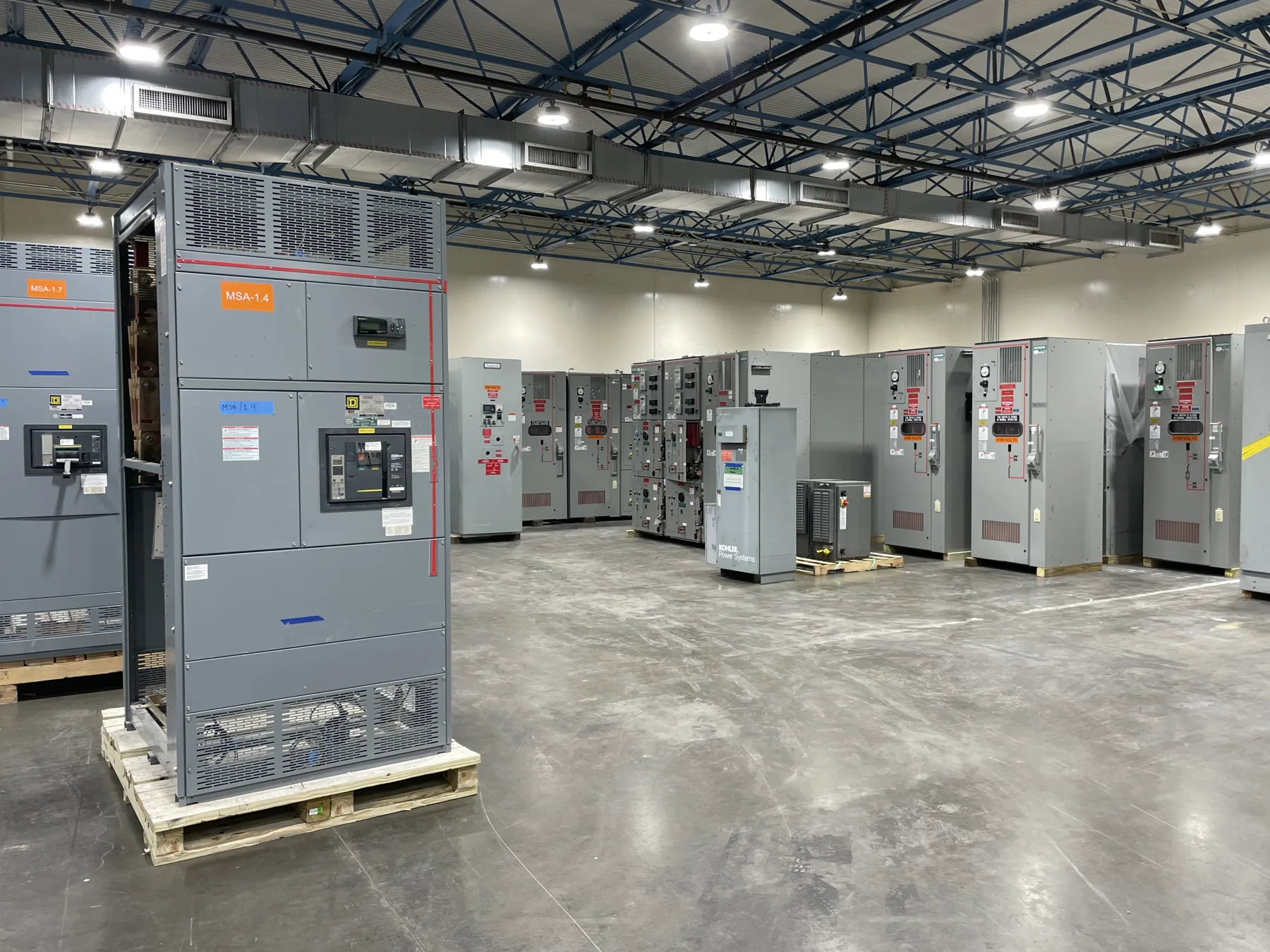
Ownership matters as much as identification. Explain whether you own the equipment or are authorized to discuss it on behalf of its owner, and whether it is still installed, scheduled for decommissioning, or already removed. The business buys used and surplus switchgear, including equipment from decommissioned data centers and shut-down power plants, and considers all voltage classes.
Describe Condition Without Testing
A useful condition summary can be straightforward: note whether the equipment is installed or stored, whether its exterior appears intact, and any known history of operation, removal, or storage. Mention missing sections or parts only when you know they are absent. These observations help frame a review; they are not a substitute for inspection and do not require you to conduct tests.
You do not need to test switchgear before asking about a purchase. If available, records such as an existing inventory, prior maintenance documents, or decommissioning notes may help explain what is being offered. Treat them as optional background, not a condition for submitting a request. Do not create new records by opening equipment or approaching an electrical hazard.
Electrical handling, isolation, and disconnects belong to qualified personnel following applicable safety procedures. Do not approach or open energized equipment to gather details, and do not arrange the electrical disconnect yourself. If a purchase is agreed, the buyer handles and pays for disconnects as well as crane, rigging, loading, freight, and hauling.
Explain Remote Pickup Access
Remote collection is easier to assess when the pickup location is specific and access constraints are described candidly. Share the address or precise site location through the quote process, along with known road conditions, gate rules, vehicle limits, or restrictions on delivery hours if you have that information. Do not assume the buyer knows what access is available from the surrounding area.
If you know about seasonal weather, road closures, or timing restrictions that could affect a visit or collection, include those details. The point is to plan around actual constraints, not to speculate about conditions. If access information is incomplete, say what is confirmed and what still needs coordination with the property owner or site contact.
The buyer handles and pays for collection logistics if the purchase proceeds, including crane, rigging, disconnects, loading, freight, and hauling. You are not being asked to source a crane, hire a hauler, or provide standalone rigging. A brief explanation of the site’s known access limits helps determine how the equipment can be reviewed and collected.
Prepare Information Safely
Gather what is already available: an equipment list, safe exterior or nameplate views, approximate quantities, and a short description of condition. Existing photographs are optional and should show only areas you can view safely. No photograph is necessary if obtaining it would require approaching energized equipment, entering a restricted area, or opening an enclosure.
For each unit or lineup, explain whether it remains in place or has been removed, and whether loose components are included. If you do not know a manufacturer, rating, or status, say so rather than guessing. The buyer reviews the information provided and may ask follow-up questions; a quote depends on that review, so no particular price or eligibility should be assumed beforehand.
If the equipment is at a remote site, identify who can confirm site access and any known scheduling rules. You can also note whether the property is being decommissioned or whether the equipment is surplus for another reason. These details help connect the equipment description with the practical realities of a possible pickup.
Request a Purchase Review
To request a review, describe the switchgear, its known condition, ownership, and actual pickup location. Include safe nameplate information or existing records when available, plus any known road, gate, weather, or timing constraints. A concise, accurate account is more useful than unsupported estimates or a promise that every item will qualify.
The business buys used and surplus switchgear across voltage classes and makes cash offers after reviewing the equipment. Testing is not required. If the purchase is agreed, payment is upfront; an offer alone does not trigger payment. The seller’s role is to share available information and coordinate access, not to perform electrical work or arrange transport.
Once the information has been reviewed, the buyer can discuss whether to proceed and how collection would be coordinated. The buyer handles and pays for crane, rigging, qualified electrical disconnects, loading, freight, and hauling. For a remote California site, accurate location and access details make that conversation more practical while leaving the seller with no collection work to arrange.