THE BUYER'S GUIDE / CALIFORNIA
Sell 4,000-Amp Electrical Equipment in California
Coordinate a Facility Change
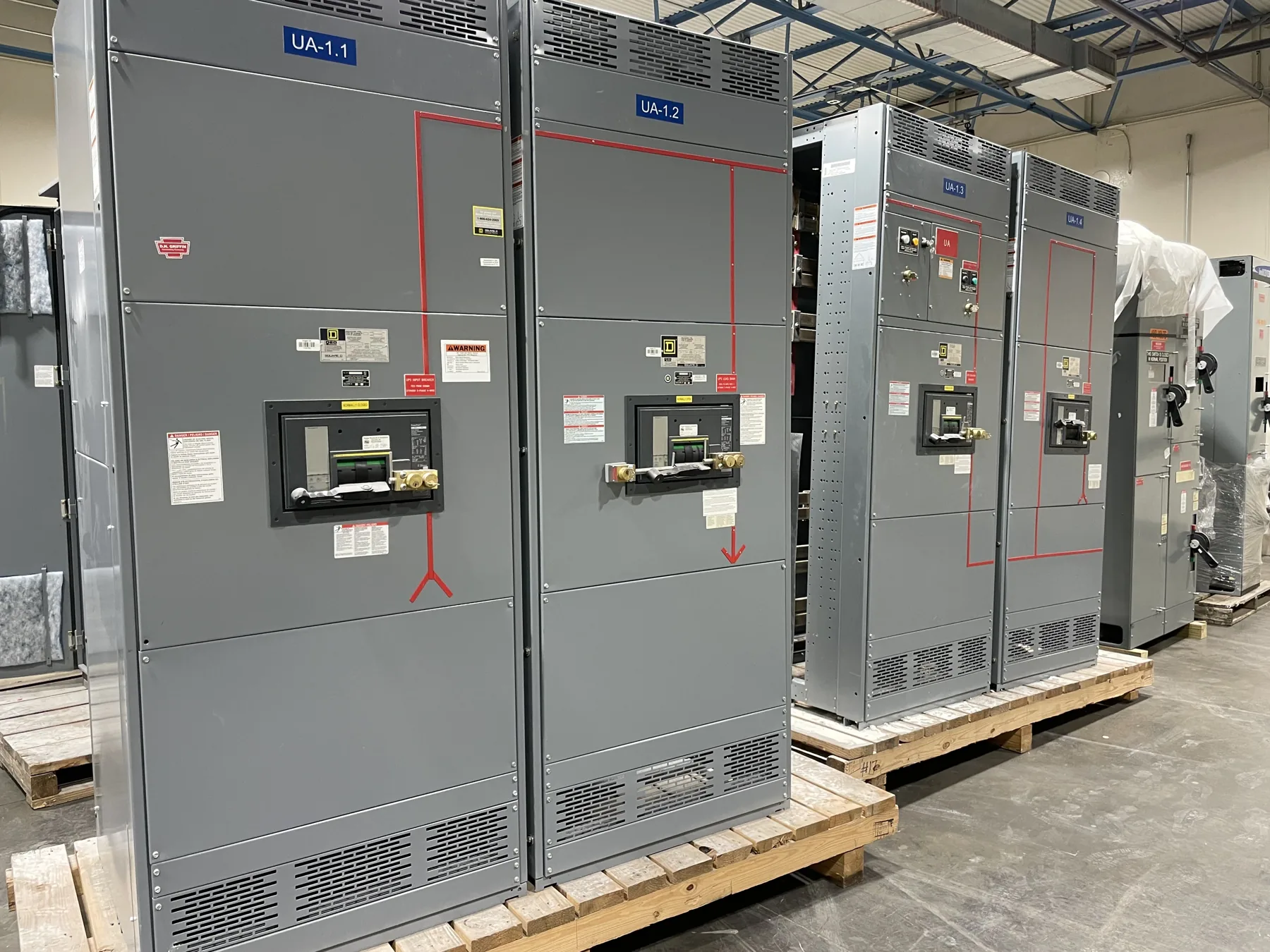
A facility change involving 4,000 amp electrical equipment can raise removal questions before anyone knows what the equipment is worth. If you are looking to sell 4000 amp electrical equipment in California, begin by describing what must be reviewed and where it sits. Do not start electrical work to prepare it for removal.
Large assemblies can be difficult to move through a building, so note the route from the equipment to a loading area. Mention known limits such as door width, stairs, restricted access, or a possible need for crane coordination. These observations help frame logistics; they do not make removal arrangements your responsibility.
The buyer handles rigging and logistics at its expense, including crane, rigging, disconnects, loading, freight, and hauling. Electrical handling and disconnects belong to qualified personnel following applicable safety procedures. Never work on energized equipment; the buyer handles the work.
Confirm What the Rating Describes
Use the actual nameplate amperage as the starting point. A 4,000-amp description should reflect the equipment label, not a figure recalled from a single-line drawing or inferred from nearby equipment. If the nameplate cannot be read safely, explain that and provide a clear image only if one is already available or can be obtained safely.
Identify the equipment type, manufacturer, and voltage when those details are legible or supported by reliable records. Explain whether the offer concerns a complete assembly, a group of sections, or a particular part. This boundary prevents a reviewer from mistaking a partial lineup for the whole installation.
A 4,000-amp rating is one important identifier, not a description of condition or completeness. Report visible damage, missing sections, storage conditions, and whether equipment is installed or disconnected, if known. Unknown details should remain marked as unknown; no test or operating check is required.
Share Useful Site Information
Existing documents can help explain a large assembly when labels alone do not show its configuration. If available, share photographs, drawings, schedules, or records that correspond to the equipment being offered. Note discrepancies between a document and the nameplate rather than silently choosing one version of the information.
If the equipment is part of a shutdown or decommissioning, describe the status plainly: for example, whether removal is being considered during a planned facility change or after equipment has been taken out of service. Do not claim a specific technical condition unless it is known from reliable information.
For a California site, provide the general location and access details relevant to review. No local industry, facility feature, or site condition should be assumed from the state alone. A short explanation of restrictions, loading access, and any known coordination window gives the buyer more practical context than a broad description of the property.
Understand What Happens Next
The buyer reviews the equipment information before making an offer. A 4,000-amp label, photographs, and a description of access can help, but none by itself guarantees a valuation or establishes that the equipment is eligible. The quote depends on reviewing the actual offering and the information available.
The business buys used and surplus switchgear, including equipment from decommissioned data centers and shut-down power plants. If the equipment comes from one of those sources, mention that only when accurate. The business makes cash offers and pays upfront; a seller does not need to perform testing to request a review.
If additional information is needed, respond with what you can verify and clearly identify anything you cannot. Avoid arranging a carrier, crane, or disconnect crew on the assumption that you must handle removal. The buyer takes care of rigging and logistics at its expense if a transaction proceeds.
Send a Practical Quote Request
Make the request actionable by stating the nameplate amperage, equipment type, manufacturer, voltage, condition, quantity, and whether the assembly is complete or partial. Include the California location, access constraints, and any known schedule considerations. Existing photographs or records are useful when they show the equipment being offered.
Be direct about limits in the information. If the manufacturer label is unreadable or the voltage is not documented, say so instead of guessing. If components are believed to be included but have not been verified, describe that uncertainty. Accurate qualifications help the buyer review the proposal without requiring the seller to inspect or test equipment.
A quote depends on review, so there is no guaranteed price or exact timing to rely on before the details are considered. The seller’s next step is to share available information and request a review. If an offer is accepted, the buyer pays upfront and handles all rigging and logistics at its expense; the seller does nothing but get paid.