THE BUYER'S GUIDE / CALIFORNIA
Sell 2,000-Amp Electrical Equipment in California
Start With the Rating You Can Verify
A common information gap when preparing to sell 2000 amp electrical equipment in California is whether the figure comes from the equipment itself or from an old project record. Solve that without testing: check the nameplate information already visible or consult existing documentation. Report 2,000 amps only when that is the actual stated rating, and identify any uncertainty plainly.
The amperage is only one part of the description. A buyer also needs to understand whether the item is a switchboard, switchgear assembly, breaker, or another electrical asset, along with the manufacturer and voltage when known. This context helps distinguish equipment that shares an amperage figure but differs in form or configuration.
If the nameplate cannot be read or is absent, do not infer the rating from a nearby unit or facility design. Explain what records are available and what remains unknown. A quote depends on reviewing the equipment and information; an accurate account of uncertainty is preferable to an unsupported specification.
Build a Useful Equipment Description
Describe the 2,000-amp equipment as it is identified in facility records or on its label. State the manufacturer and voltage only when the information is documented or legible. If several pieces are being offered, connect each description to the correct unit so that a rating or manufacturer is not accidentally attributed to the whole group.
Condition details can help explain the asset’s present situation. Say whether it remains installed, has been removed, or is in storage, and mention visible damage or known missing components. Do not make claims about internal operation unless supported by existing records. There is no need to test the equipment to request a quote.
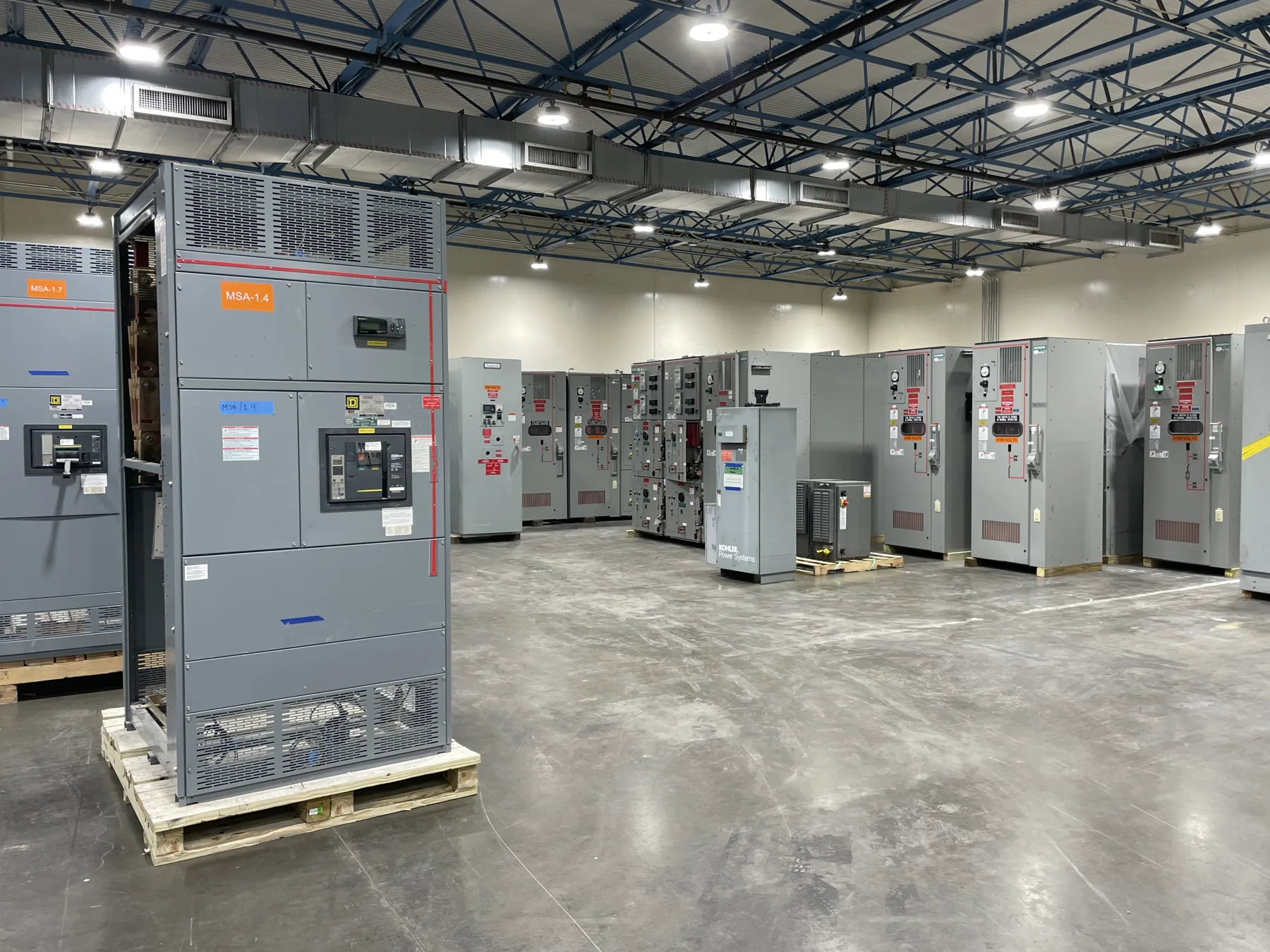
Photographs can provide useful context when they are already available or can be taken safely from an appropriate location. A nameplate image may confirm the rating; an exterior view can show the general assembly. Do not open electrical enclosures or approach unsafe equipment to obtain images. The buyer does not require sellers to test.
Connect Identification to Removal Planning
Once the equipment is identified, note where it sits and what is known about the path out of the facility. Relevant details may include floor level, doorway constraints, loading access, and whether a crane could be needed. Describe observed or recorded conditions rather than estimating dimensions or claiming that a route is clear without confirmation.
For California sites, a general location and site-specific access notes are more useful than broad assumptions about local infrastructure. If the equipment is part of a decommissioned data center, shut-down power plant, or other project, identify that context only when it applies. The buyer purchases used and surplus switchgear, including equipment from decommissioned data centers and shut-down power plants.
The buyer handles logistics at its expense, including crane, rigging, disconnects, loading, freight, and hauling. Qualified personnel following applicable safety procedures must handle electrical work and disconnects. Do not work on energized equipment or attempt to prepare a large assembly for shipment; provide the information and let the buyer coordinate the work.
Give the Project Context Without Guessing
A 2,000-amp assembly may be associated with a larger facility change, but the equipment description should remain specific. If the sale includes more than one item, list the known types and ratings separately. If the asset is part of a shutdown or upgrade, explain whether it is still in place and whether other equipment is being considered at the same time.
Existing inventory records, photographs, or decommissioning documents can help clarify scope and condition. Share relevant material that is already available, while distinguishing records from current observations. For example, an old record may show a manufacturer, while the present condition is only known from an exterior view. This distinction gives the reviewer useful context without overstating certainty.
The buyer purchases all voltage classes, but that does not remove the need to review the specific equipment. Do not assume that the stated amperage alone establishes a price or confirms eligibility. A quote depends on the equipment review, and timing depends on the information and logistics involved rather than a promised schedule.
Send a Precise Quote Request
For an actionable request, identify the asset as 2,000-amp electrical equipment and include its equipment type, manufacturer, actual nameplate amperage, voltage if known, and condition. Give the quantity and the general California location. Explain whether it is installed or removed, and identify any access constraints already known from site records or safe observation.
Include photographs or documents you already have, and mark unclear fields as unknown. Mention whether the request relates to a facility shutdown or decommissioning, if relevant, and whether additional switchgear may be included. You do not need to commission tests or arrange disconnection before requesting a review.
The buyer reviews the equipment before making a cash offer, pays upfront, and handles rigging and logistics—including crane, rigging, disconnects, loading, freight, and hauling—at its expense. The seller does nothing but get paid after sharing the available information and coordinating access. Submit what is confirmed, identify what is not, and leave the technical work to qualified personnel and the buyer’s logistics process.