THE BUYER'S GUIDE / CALIFORNIA
Used Pad-Mounted Switchgear Buyers in California
Review Information Before Freight
For a California owner considering used pad-mounted switchgear, a useful first step is to describe the equipment before discussing freight. The buyer can review the available information and determine what follow-up is needed. A quote depends on review of the equipment; providing an address or arranging a shipment does not establish a price or guarantee that an offer will follow.
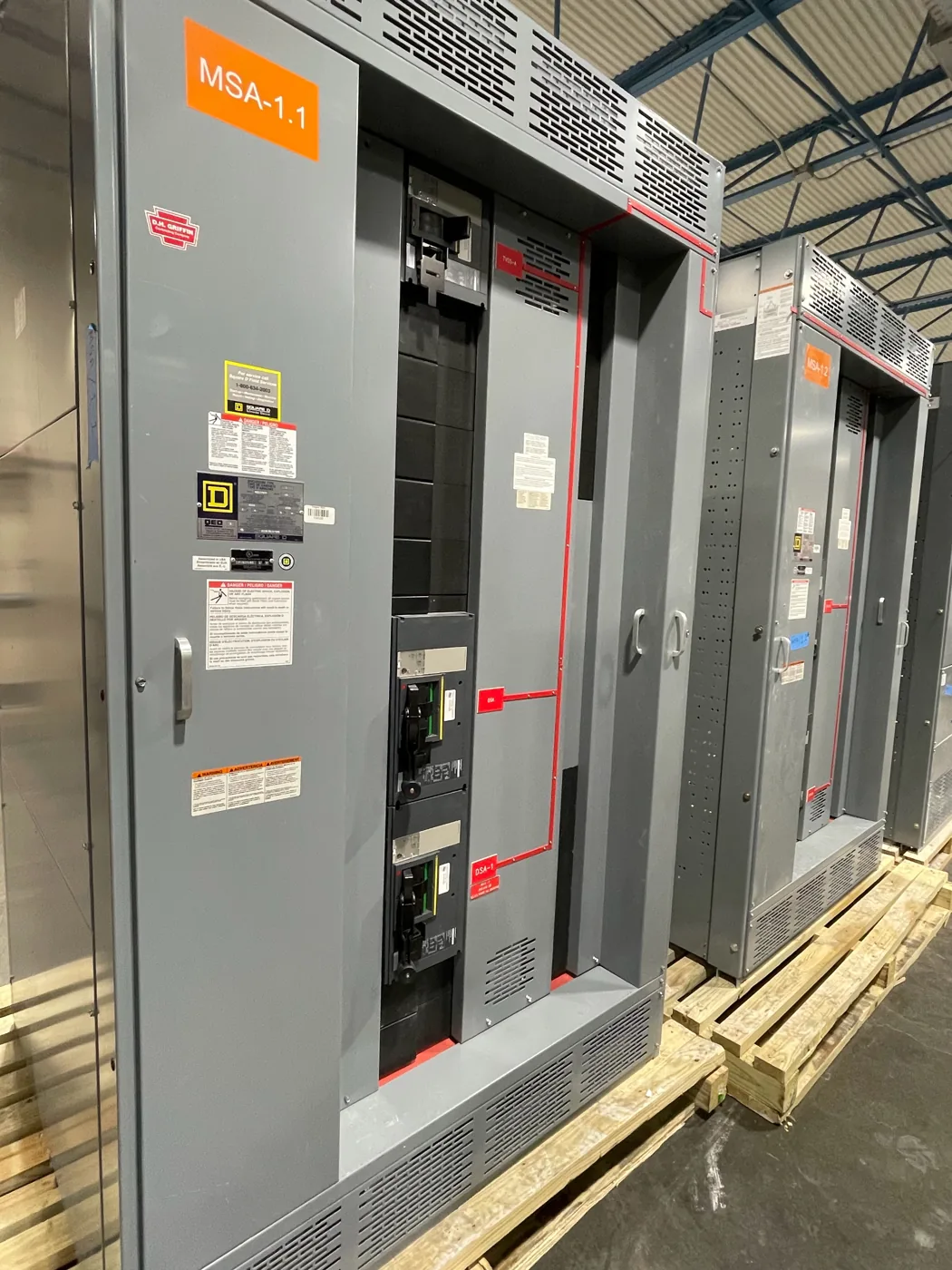
Start with what can be observed safely from outside the enclosure: its general form, visible labels, and apparent number of compartments. Add readable nameplate ratings and any existing records that identify the manufacturer or configuration. If a rating cannot be read, report that limitation instead of trying to supply a likely value.
Never open energized equipment to obtain a photograph or inspect a compartment. Electrical handling and disconnects are work for qualified personnel following applicable safety procedures. The seller is not required to test the switchgear. Exterior photographs and existing documentation can be useful without asking anyone to enter or alter the equipment.
Connect Surplus to Decommissioning
Pad-mounted switchgear can become surplus when a facility is decommissioned, a site changes its electrical arrangement, or equipment is removed from service. Explain the known reason it is available and whether removal has already taken place. If the equipment came from a decommissioned data center or a shut-down power plant, mention that origin only when it is accurate.
Clarifying ownership is also important. State whether the organization requesting a quote owns the equipment or is authorized to discuss its sale, and identify any known limits on what is included. This helps distinguish the switchgear from other assets at the site and makes it easier to understand who can answer questions about records or access.
Share the known service history without implying that an inspection or test has occurred. For instance, a seller may know that the equipment was in service before a shutdown, or may only know that it has been stored for an unspecified period. Both are useful when clearly presented as known facts or as unavailable information.
Identify Enclosure and Ratings
Describe the outdoor enclosure in plain terms and give the apparent number of compartments if that can be seen safely. A photograph of the complete exterior can orient the review, while close views of readable nameplates may help identify electrical ratings. Do not remove a cover, open a compartment, or approach exposed electrical parts to improve the images.
A nameplate may identify voltage, current, and other equipment ratings, but include only values that are actually legible or supported by records. If several labels are present, explain which one appears attached to the switchgear and include any uncertainty. The buyer can consider the available information and ask for clarification rather than relying on a seller’s guess.
Also note whether operating handles, visible doors, or exterior parts appear present or damaged, but describe observations rather than making claims about hidden internal condition. The number of compartments and overall arrangement may help distinguish the item being discussed from adjacent equipment. If the precise configuration is unknown, a broad description and clear photographs are preferable to an invented specification.
Share Access Without Taking Work
Site access information can matter because pad-mounted equipment may be positioned outdoors with a route that affects removal. Explain what is known about vehicle approach, nearby loading space, gates, overhead obstructions, or restrictions on site access. Avoid promising that a crane or truck can reach the equipment unless that has been confirmed by the responsible site personnel.
The buyer handles rigging and logistics, including crane, rigging, disconnects, loading, freight, and hauling, at its expense. The seller is not expected to arrange a carrier or perform the removal. Any electrical disconnect or handling must be completed by qualified personnel following applicable safety procedures, and no one should work on energized equipment.
Share access rules or coordination requirements that the facility has established, such as a need to schedule entry through a site representative. If details are pending, say that they are pending. These notes help the buyer consider practical next steps without shifting removal duties to the seller or treating uncertain access as settled.
Make a Practical Quote Request
A concise request can state that the equipment is pad-mounted switchgear in California, describe its decommissioning or surplus context, and summarize ownership, enclosure, compartment count, and readable ratings. Attach safe exterior photographs and relevant existing records. Clearly separate confirmed information from unanswered questions so the review can proceed on a sound basis.
A quote is subject to review of the equipment and the information available. Do not assume a valuation or eligibility before that review, and do not arrange testing to support the request. If the buyer needs clarification, the seller can respond from existing records or explain that a detail is unknown. This keeps the process focused on information already available.
The business buys used and surplus switchgear in all voltage classes, makes cash offers, and pays upfront. It takes care of rigging and logistics at its expense, including disconnects, loading, freight, and hauling. For the seller, the practical task is to describe the asset and access conditions, provide what is safely available, and wait for the buyer’s review.