THE BUYER'S GUIDE / CALIFORNIA
Used Medium-Voltage Switchgear Buyers in California
Start With What You Know
When a facility in California has surplus medium-voltage switchgear, a quote request does not need to resolve every technical uncertainty. Begin with the information already available: equipment labels, existing records, photographs, and the circumstances of removal. Clear distinctions between confirmed details and unknowns help a buyer review the equipment without asking a seller to guess.
Useful identification often includes the voltage and current ratings, interrupting rating if readable, breaker type, manufacturer, and lineup arrangement. Share only what can be confirmed from a nameplate or reliable document. If a label is obscured or a record is missing, say so; an honest gap is more helpful than an assumed rating.
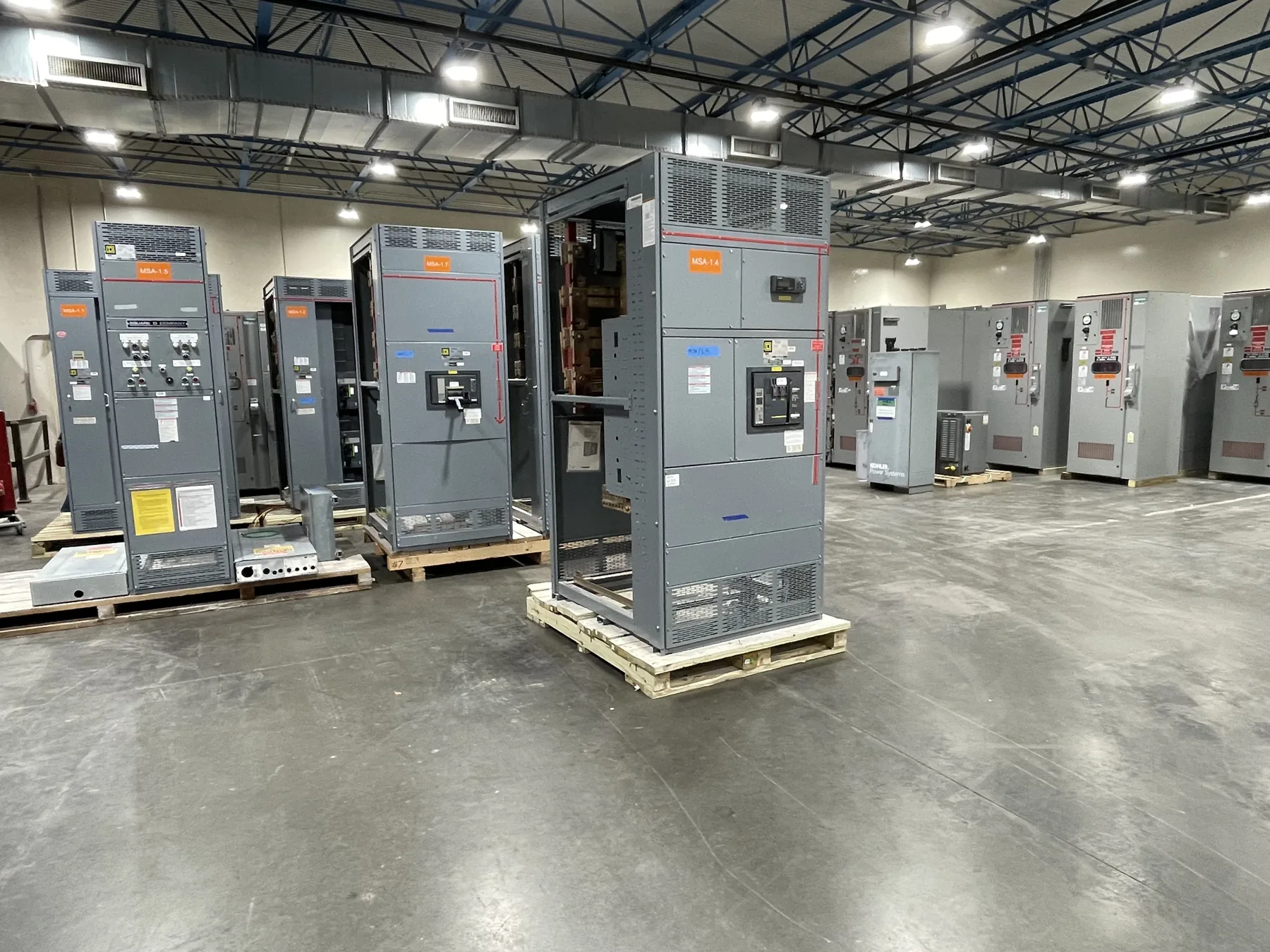
Photographs can show the overall lineup, visible nameplates, breaker fronts, and any readable section labels. They can also provide context about configuration and condition without requiring hands-on inspection by the seller. Do not open energized equipment or remove covers for a photo. Electrical handling and disconnects belong to qualified personnel following applicable safety procedures.
Describe the Lineup Clearly
A medium-voltage lineup may consist of multiple sections serving different functions, so a single overall picture may not explain what is included. Note the apparent number of sections and, where records identify them, describe incoming, feeder, or tie sections. If the section purpose is uncertain, label it as unknown rather than assigning a function based on appearance.
Breaker type matters because equipment with similar exterior dimensions can contain different switching and interruption arrangements. Share a readable breaker label or the type recorded in facility documents, if available. Do not infer a type from a handle or front panel alone. The buyer can review the information provided and may ask follow-up questions before making an offer.
Clarify whether the equipment is a complete lineup or a partial group of sections, and mention removable breakers or other components that are included. A simple description of what remains with the equipment helps prevent confusion about the scope of a quote. If accessories are stored separately, describe them and their location without attempting electrical work to retrieve them.
Explain Service and Condition
Known service status helps put records and photographs in context. A seller might share whether the lineup was operating before shutdown, when it was taken out of service if that is known, and whether it has been stored or left in place since. These are historical details, not a request to energize, operate, or test the switchgear.
Condition information can be limited to visible or documented observations. For example, report whether sections appear complete, whether doors or panels are visibly damaged, and whether labels or maintenance records are available. Avoid presenting an unverified conclusion about internal condition. Sellers do not need to test the equipment; a buyer’s review depends on the information available and the equipment itself.
If switchgear comes from a decommissioned data center or a shut-down power plant, explain that origin when known and identify what the facility has already removed. The setting can help clarify why a lineup is surplus and whether associated breakers or documentation remain. Do not assume every related part is included simply because it was installed nearby.
Plan Removal and Access
Before a quote is reviewed, it can help to describe where the lineup is located and what access conditions are known. Mention whether it is indoors or outdoors, whether a loading area is nearby, and whether the route out includes narrow doors, stairs, or restricted clearances. If measurements are uncertain, say so rather than estimating exact dimensions.
The seller does not have to arrange dismantling or transport. The buyer handles rigging and logistics, including crane, rigging, disconnects, loading, freight, and hauling, at the buyer’s expense. Electrical disconnects and handling must be performed by qualified personnel following applicable safety procedures; a seller should not work on energized equipment or attempt to prepare it electrically.
Useful access notes help the buyer consider how removal might be coordinated, but they are not a demand that the seller move the lineup. Share any known site rules, access windows, or coordination needs as information. If site procedures are not yet confirmed, note that they will need to be discussed with the responsible facility contact.
Request a Review and Offer
To request a quote, describe the medium-voltage switchgear, identify its California location, and send the information already at hand. Include readable ratings, breaker type, lineup photographs, known service status, and a note about missing or uncertain details. This gives the buyer a practical basis to review the equipment and ask focused follow-up questions.
A quote depends on review of the equipment and the details provided; no price or eligibility should be assumed before that review. There is no requirement for the seller to test the lineup. If additional information is requested, the seller can share existing records or explain what cannot be confirmed, rather than conducting electrical work or creating new test results.
The business buys used and surplus switchgear across all voltage classes, makes cash offers, and pays upfront. It also handles the rigging and logistics at its expense, so the seller does nothing but get paid. An actionable request is simply a clear description, available records and safe photographs, plus an explanation of what is known and what remains uncertain.