THE BUYER'S GUIDE / CALIFORNIA
Used Medium-Voltage Motor Control Centers Buyers in California
Identify the Surplus Lineup First
A surplus medium-voltage motor control center should be identified from the records and markings already available before anyone discusses removal. A seller in California can begin with the manufacturer, visible lineup labels, and any drawings or schedules retained when the equipment was installed. That basic description anchors a review without requiring electrical testing or a hands-on inspection by the seller.
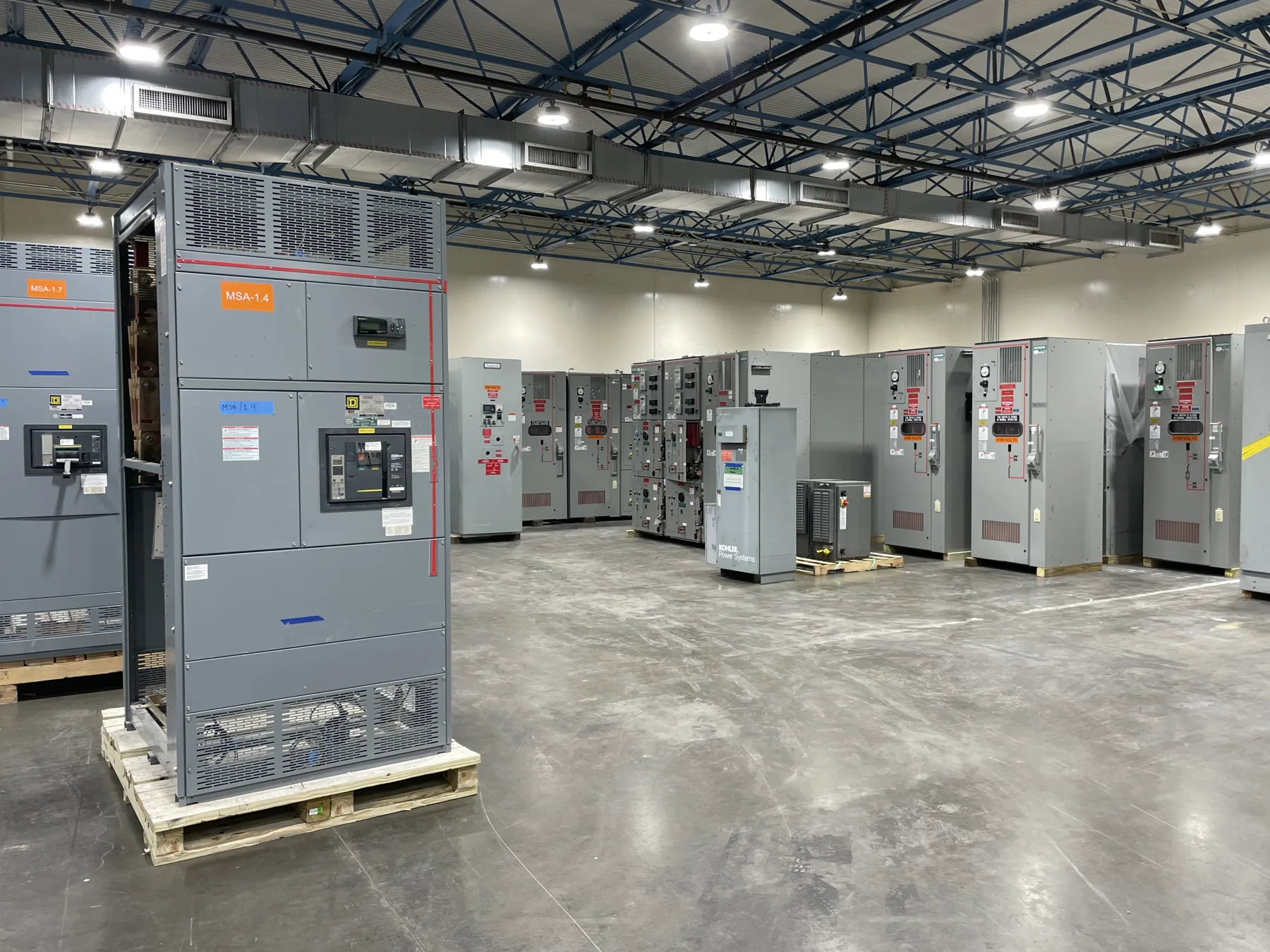
For used medium-voltage motor control centers buyers in California, exact equipment identity matters because a broad label may not describe the assembly’s configuration. Note whether the lineup is one connected arrangement or separated sections, and describe any visible differences among sections. If a manufacturer or model cannot be read, state that plainly and provide a safe photograph of what is visible.
Do not open electrical compartments, remove barriers, or approach equipment in a way that conflicts with site procedures. Existing documents and exterior labels are enough to begin an information request. A quote depends on review of the specific equipment and the facts available; identifying uncertainty accurately is more useful than guessing at a nameplate value or configuration.
Capture Voltage and Configuration Records
Share the voltage exactly as it appears on a legible nameplate or existing equipment schedule. Include the source of the information, such as an exterior label or retained record, so a reviewer can distinguish a direct marking from a recollection. Never invent nameplate details or infer voltage from the connected motor or the facility where the lineup was used.
Manufacturer information, model identifiers, and lineup arrangement can further narrow what is being reviewed. Describe the number of sections if known, approximate overall length when safely available, and whether the assembly appears intact or has visible gaps. Existing drawings, manuals, or configuration schedules may help explain the lineup, but do not treat a document as proof that every described component remains present.
Medium-voltage equipment warrants particular care around identification and removal planning. Sellers should not perform electrical work, testing, or disconnects. Qualified personnel must handle electrical tasks following applicable safety procedures. If a rating label is obscured or records conflict, report the discrepancy and let the review account for uncertainty instead of altering or interpreting the equipment yourself.
Explain Starter Arrangement and Documentation
A description of the motor starter configuration can help distinguish one lineup from another when it is supported by visible labels or existing records. Share starter schedules, component lists, or photographs of accessible exterior markings if available. If the lineup contains different starter arrangements, explain which sections the records appear to describe, and identify anything that remains uncertain.
Documentation can also show whether the assembly was modified, expanded, or associated with particular motors, but do not assume that the original drawings match the current equipment. Note the document date if known and whether the records are complete. A short explanation of how the records relate to the lineup is more useful than sending pages without context or claiming undocumented components are present.
No seller testing is required. Do not operate starters, inspect energized compartments, or remove components to verify a configuration. Share only information already held or safely visible. This approach allows a buyer to review the medium-voltage motor control center while keeping technical handling with qualified personnel and avoiding unsupported claims about operating condition.
Prepare Access Information Safely
Removal planning starts with the physical route, not an attempt to move the equipment. Describe the lineup’s location, nearby obstructions, doorway or aisle constraints, floor changes, and the distance to a loading area when known. Existing facility plans or safe photographs can help explain access. Mark estimates clearly, and do not enter restricted areas or measure near equipment if site procedures prohibit it.
Note whether the lineup remains installed, has already been disconnected by qualified personnel, or is separated into sections, based on information you can confirm. Electrical handling and disconnects belong to qualified personnel following applicable safety procedures; sellers should not undertake that work. The buyer handles rigging and logistics, including crane, rigging, disconnects, loading, freight, and hauling at its expense.
If equipment is being cleared from a decommissioned data center or shut-down power plant, share relevant loading restrictions or coordination requirements that the facility has provided. Keep sensitive security details out of an initial inquiry. Clear access information helps assess practical removal needs without implying that a specific California site has particular infrastructure or that the seller must arrange heavy lifting.
Make a Precise Quote Request
A useful request identifies the California location, manufacturer and model if known, voltage from an existing marking or record, starter configuration, lineup size, and available documentation. Add safe photographs, a concise description of visible condition, and what is known about removal access. Explicitly flag missing or conflicting details so the review does not rely on assumptions.
The business buys used and surplus switchgear, including medium-voltage motor control centers, and buys all voltage classes. It makes cash offers and pays upfront when a transaction is agreed. Sellers do not have to test equipment. Any quote depends on review of the specific lineup and information provided, so the request should seek an assessment rather than assume a particular price or outcome.
The buyer handles all rigging and logistics, including crane, rigging, disconnects, loading, freight, and hauling, at its expense. The seller does nothing but get paid. To begin, gather records already available, describe what can be confirmed safely, and ask for a review of the identified equipment without performing electrical work or making unsupported condition claims.