THE BUYER'S GUIDE / CALIFORNIA
Switchgear Buyers in Fresno County, CA
Identify the Equipment Without Testing
A switchgear lineup can be difficult to describe when records are incomplete, but a seller can begin with information already visible on labels and existing documents. For sellers seeking switchgear buyers in Fresno County, CA, the first useful step is to describe what is present without opening equipment or performing electrical work.
Share the manufacturer, model or catalog designation, and any readable nameplate ratings. Depending on the equipment, labels may identify voltage, current, frequency, interrupting rating, or other specifications. Report only what the nameplate actually shows; if a label is missing, damaged, or unreadable, say so rather than estimating a value.
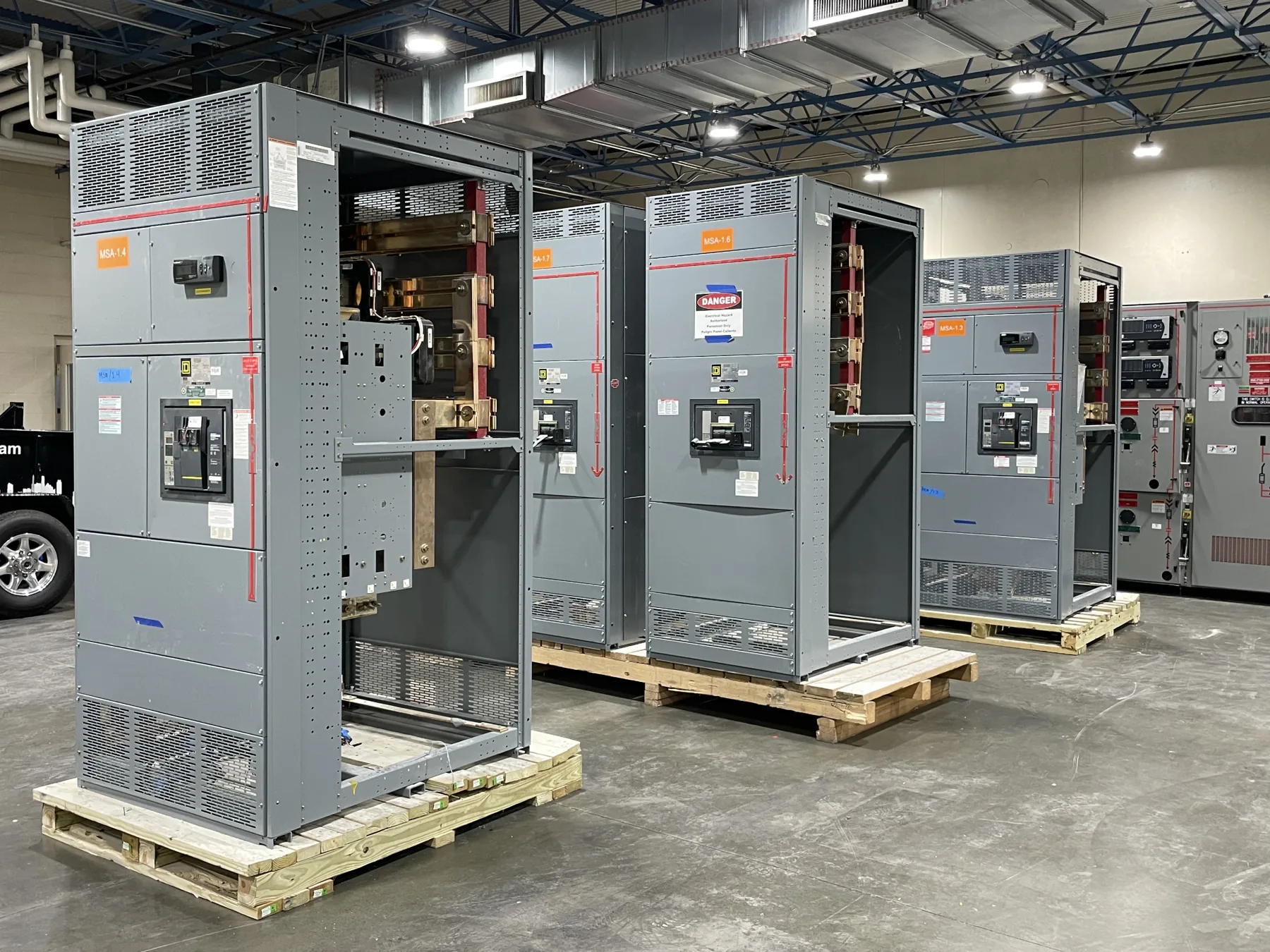
Photographs can help clarify the configuration when they can be taken safely from an accessible position. Images of the overall lineup, exterior nameplates, and visible sections can support an initial review. Do not remove covers, enter restricted electrical areas, or approach energized equipment to obtain a picture; qualified personnel must handle electrical access under applicable procedures.
Describe the Lineup and Its Condition
A useful description distinguishes a complete lineup from individual sections, spare breakers, or loose components. Note the approximate number of cabinets or sections and identify visible components by their existing labels. If you do not know whether a component belongs with the lineup, describe where it was found and let the reviewer assess the relationship.
Condition information should be factual and limited to what you can observe or confirm from records. Mention whether the equipment is represented as installed, removed, stored, or incomplete, and note visible damage, missing doors, or absent components. If operating history or maintenance documents are available, you may share them, but no seller is required to test equipment.
This context helps a buyer understand what is being considered and what remains uncertain. A closed cabinet should not be described as operational merely because it appears intact. Likewise, a known issue should not be concealed. Clear distinctions between observed condition, documented history, and unknown details make a review more useful without turning the seller into an equipment inspector.
Connect the Equipment to Decommissioning
Switchgear may become surplus during a facility change, a system upgrade, or decommissioning. If the equipment came from a decommissioned data center or a shut-down power plant, that background can help explain why it is available and whether related sections or records may also exist. No particular site history needs to be assumed or disclosed beyond what you know.
For a Fresno County seller, explain whether the equipment is still installed, staged for removal, or already separated from its original electrical system. Include the general facility type only if it is accurate and useful. If the switchgear was removed earlier, mention whether associated breakers, controls, or documentation remain available, without claiming completeness unless you can verify it.
The buyer purchases used and surplus switchgear across all voltage classes and makes a cash offer after reviewing the equipment information. Sellers do not need to perform tests to qualify for consideration. Existing records can be shared voluntarily; their purpose is to inform the review, not to create a testing obligation or guarantee a particular valuation.
Plan Access and Removal Details
Pickup planning depends on the equipment’s present location and the path from its position to a loading area. Describe the facility location in Fresno County, whether the gear is indoors or outdoors, and any known access limits such as narrow doors, stairs, restricted entry, or limited vehicle approach. These details help the buyer consider handling needs before discussing freight.
Do not disconnect, move, or prepare electrical equipment yourself. Qualified personnel must handle electrical work and disconnects under applicable safety procedures. The buyer handles rigging and logistics at its expense, including crane work, rigging, disconnects, loading, freight, and hauling. Explain any known site rules or access arrangements so that the work can be planned responsibly.
If the equipment remains in service or is near energized apparatus, say so plainly and arrange any site coordination through the responsible facility personnel. Never approach energized equipment for measurements or photographs. The seller’s role is to provide available information and access coordination, not to carry out electrical handling, dismantling, or loading.
Request a Review and Cash Offer
For an actionable request, describe the equipment type, manufacturer and model if readable, nameplate ratings, approximate quantity or lineup size, and known condition. Add the pickup location within Fresno County and explain whether the equipment is installed, staged, or already removed. Include safe photographs or existing records when available, while clearly identifying anything uncertain.
If records are incomplete, send what you can confirm and state what is missing. You may also describe the equipment’s origin, such as a decommissioned data center or shut-down power plant, when that is accurate. The business reviews the information before making an offer, so no exact price or eligibility should be assumed in advance.
The buyer makes cash offers and pays upfront when a purchase is agreed. Sellers are not asked to test the switchgear, and the buyer handles the rigging and logistics at its expense. A concise, accurate request gives the reviewer a practical basis to assess the equipment and discuss next steps; it does not promise a valuation or exact timing.