THE BUYER'S GUIDE / CALIFORNIA
Sell Used Switchgear in Madera County, CA
Plan Around the Facility Change
A facility change can leave switchgear with a clear release date but an uncertain removal plan. If you want to sell used switchgear in Madera County, begin by describing what is already known about the equipment and when the area may become accessible. A firm schedule is helpful, but an estimate is still useful when clearly identified as tentative.
Share whether the lineup remains installed, has been disconnected, or has already been removed, if that information is available. You do not need to determine technical details yourself. For equipment from a decommissioned data center, shut-down power plant, or another facility, a brief description of the change can help explain why the gear is surplus without assuming anything about its condition.
Separate confirmed facts from open questions. For example, state a known release date as confirmed and a possible date as unconfirmed. Mention whether gate access, floor level, and the loading route are known. These details help frame a review and later logistics discussion; they do not mean you must arrange removal or electrical work.
Describe the Switchgear You Have
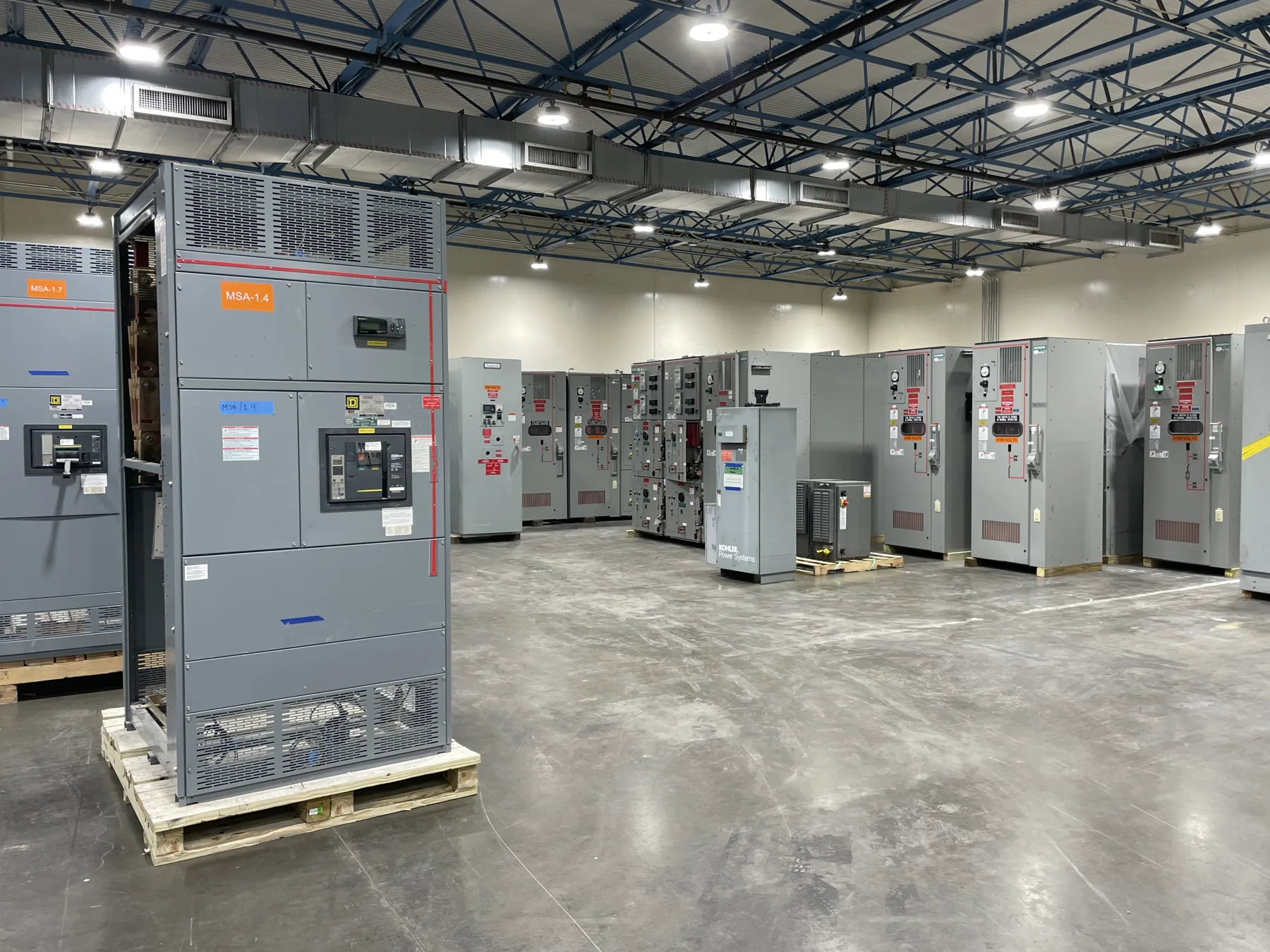
A useful initial description identifies the equipment as specifically as existing records allow. You might share the manufacturer and model if documented, the number of sections, and any voltage or other ratings visible on an exterior nameplate. All voltage classes are considered, so do not exclude equipment because its rating is unfamiliar or not yet confirmed.
A lineup may include connected sections or related components, and the number and general arrangement can affect how the equipment is understood. Describe what you can observe safely from outside, and distinguish your observations from information taken from records. If a label is unreadable or a rating is unavailable, say so instead of estimating or supplying a value from memory.
Existing exterior photographs or clear views of nameplates can be helpful when safely available, but they are optional. Do not remove covers, approach energized equipment, or take a picture that requires unsafe access. No photograph is needed if obtaining one would be unsafe. Seller testing is not required, and you should not open the equipment to prepare a quote request.
Share Condition Without Testing
Condition information can clarify what is known about the gear without turning a sale inquiry into a technical inspection. Describe visible exterior damage, missing sections, storage conditions, or whether the equipment is still in place only when you already know those details. If the condition has not been assessed, say that directly rather than treating an unknown as a defect or a guarantee.
Documents already on hand may provide context, such as an equipment schedule, prior inventory, or records identifying the lineup. You can share relevant existing information, but there is no need to commission new testing or produce measurements. The buyer reviews the available description before making an offer, and any offer depends on that review.
Electrical work and disconnects belong to qualified personnel following applicable safety procedures. Do not approach or open energized switchgear to confirm a detail. If the equipment remains installed and its electrical status is uncertain, leave it undisturbed and explain what is known. The buyer handles electrical disconnects as part of the agreed logistics, at the buyer’s expense.
Coordinate Access and Removal
For equipment at a Madera County facility, access information can help determine what removal planning may involve without assuming a particular site layout. Share whether a gate procedure, appointment, floor level, doorway constraint, or loading route is already documented. If a detail is unknown, mark it unknown; the buyer can discuss how to resolve logistics after reviewing the equipment.
A release date matters because it helps distinguish equipment available now from equipment that must remain in place until a later facility milestone. Give the known collection window, or explain that scheduling has not been established. You are not expected to arrange a crane, rigging, loading crew, freight, or hauling. If a purchase is agreed, the buyer handles and pays for those logistics.
Do not move equipment or modify an access route to obtain information. Existing site notes and safely visible conditions are enough to begin. The buyer can consider practical access questions as part of the review and coordinate the required work with qualified personnel. This keeps the initial conversation grounded in known facts while leaving removal planning with the party responsible for it.
Request a Review and Offer
To request consideration, describe the switchgear, share available nameplate or inventory information, and state where it is located within the facility as precisely as you safely can. Include the release date, gate access, floor level, and loading route when those details are known. Clearly label estimates, unknowns, and confirmed information so the review does not depend on assumptions.
A quote depends on reviewing the equipment and the information available; an inquiry alone does not establish a price, eligibility, or a guaranteed valuation. You can ask about selling a single lineup or surplus equipment from a larger facility change. The buyer makes cash offers and buys used and surplus switchgear across voltage classes, including equipment from decommissioned data centers and shut-down power plants.
If the purchase is agreed, payment is upfront. Making an offer by itself does not trigger payment. The buyer handles and pays for crane, rigging, electrical disconnects, loading, freight, and hauling, so your role is to share existing information and coordinate access as needed. You do not have to test the gear or perform electrical work to ask for a review.