THE BUYER'S GUIDE / CALIFORNIA
Sell Used Air-Insulated Switchgear in San Bernardino, CA
Begin With the Facility Change
A facility change can leave an air-insulated switchgear lineup that no longer has a role at the site. If you are considering whether to sell used air-insulated switchgear in San Bernardino, California, first establish what is available and how it can be released. A brief account of the change helps the buyer understand timing without requiring a technical test.
Say whether the lineup remains installed, is awaiting removal, or has been moved into storage. Include any known access window, floor changes along the route, or appointment restrictions. These details matter because a large lineup can involve a different removal plan depending on where it sits and how it can be reached.
You are not responsible for planning the lifting operation or arranging a disconnect. Do not approach energized equipment, operate it, or open it to collect information. Qualified personnel perform electrical work under applicable safety procedures. The buyer handles and pays for disconnects, rigging, crane, loading, freight, and hauling if a purchase is agreed.
Identify the Lineup Clearly
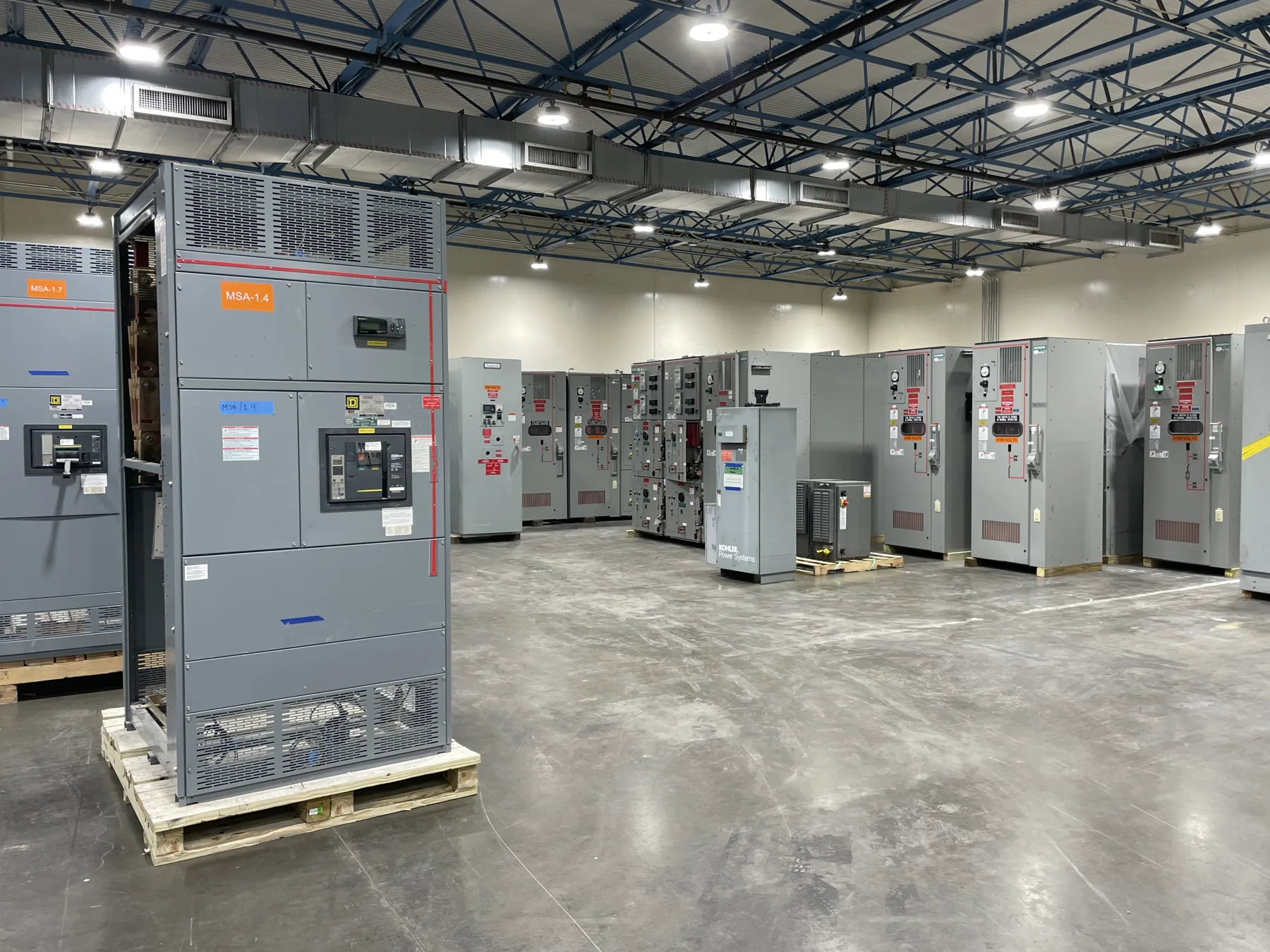
Readable markings can help distinguish the lineup and its sections. Share manufacturer and model information from an exterior nameplate or existing records, along with any voltage class or other documented identification. Do not make up missing nameplate details. If a marking is unreadable from a safe position, report that limitation instead of trying to remove a cover.
Section count is useful when known from drawings or a safely visible exterior view. A lineup's arrangement may be represented in equipment schedules, one-line documents, or other records already available to you. Send those materials if appropriate, but do not open equipment or photograph interior compartments to confirm the arrangement.
Records identifying the insulation type and configuration can help clarify what is being offered. If the description air-insulated comes from documentation, note that source; if you are unsure, state that. Existing information supports a more accurate review than assumptions based on appearance, and incomplete documentation does not require you to perform new testing.
Describe Condition and Stored Parts
Provide a straightforward account of visible exterior condition, including any obvious dents, corrosion, or missing exterior panels. Avoid conclusions about internal condition unless a qualified report already documents it. An exterior description is only one part of the review, but it can help identify questions to discuss before removal is planned.
If parts or accessories are stored separately, describe them and where they are, based on records or safe observation. Mention whether they are believed to belong with the lineup, while distinguishing certainty from assumption. A separate box or component should not be represented as a complete assembly unless its identity and relationship are known.
Service records, equipment schedules, and decommissioning documents can provide context on configuration and history. Share available material without creating a test report or opening the switchgear. The buyer does not require seller testing. If a document is missing or a detail remains unclear, simply say so and let the review proceed from confirmed facts.
Share the Removal Conditions
Access information helps the buyer consider how the lineup might be removed. Explain floor changes, stairs or other route features if known, and note whether the equipment is on a level that affects access. Also share access hours or scheduled windows established by the facility, without assuming that a particular method or equipment will be needed.
Describe any loading restrictions, site procedures, or limitations on where a vehicle may wait. The buyer can use those details to coordinate logistics if the purchase is agreed. You do not need to arrange a crane, rigging, loading crew, freight, or hauling, and you should not disconnect electrical equipment yourself.
Qualified personnel must handle electrical disconnects under applicable safety procedures. Do not approach or open energized equipment to prepare it for removal or gather photographs. If the lineup is already stored, explain its location and any known lifting constraints; if those facts are uncertain, identify them as unknown rather than proposing a handling method.
Ask for an Equipment Review
A quote request can state that the asset is used air-insulated switchgear in San Bernardino, California, then summarize its manufacturer, model, readable markings, section count, and the records identifying insulation or configuration. Include visible condition, separately stored parts, ownership or approval status, and the likely release date. Details help the buyer decide what follow-up is useful.
Existing exterior, lineup, or nameplate photos are optional only if they are safely accessible. Do not open a cabinet or approach equipment that may be energized to take a picture; no photo is needed when obtaining one would be unsafe. Existing documents can be shared instead, with any uncertainty clearly noted.
The buyer reviews the available information and may ask questions before making an offer. A quote depends on that review and does not guarantee a value or purchase. If a purchase is agreed, payment is upfront. The seller does nothing but get paid, while the buyer handles and pays for electrical disconnects, rigging, crane, loading, freight, and hauling.