THE BUYER'S GUIDE / CALIFORNIA
Sell 600-Volt Electrical Equipment in California
Decide What to Include in a Sale
If a facility change in California leaves 600-volt electrical equipment with no role in the next operating plan, it can be useful to consider a sale before removal arrangements are settled. Start by identifying which units are actually surplus, rather than treating every panel or component in a room as one lot. Clear boundaries help everyone understand what is being reviewed.
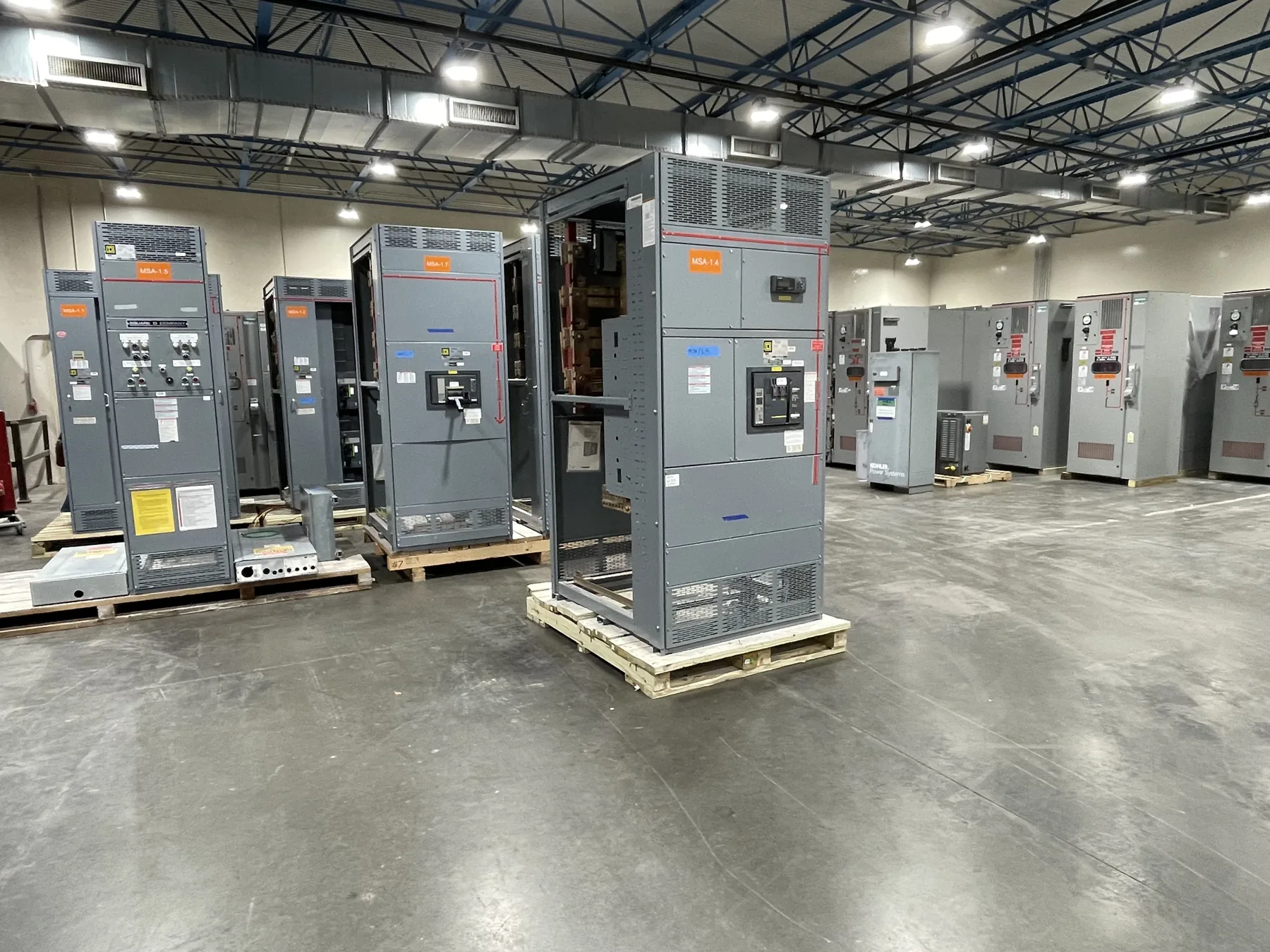
A buyer of used and surplus switchgear may consider equipment from a decommissioned data center, a shut-down power plant, or another facility transition. The business buys across voltage classes, makes cash offers, pays upfront, and handles rigging and logistics at its expense. A quote depends on reviewing the equipment; no particular price or eligibility should be assumed in advance.
Selling does not mean that your staff must test equipment or disconnect it. Electrical work belongs to qualified personnel following applicable safety procedures, and the buyer handles disconnects and removal coordination. Your practical first step is to describe the equipment and the site situation accurately, then request a review based on those details.
Read the Nameplate, Not the Assumption
For equipment described as 600 volt, use the actual nameplate voltage rather than relying on a drawing, room label, or remembered specification. Voltage alone does not identify a unit. Provide the equipment type, manufacturer, amperage, and condition when those details are available, and distinguish each unit if a group contains different configurations.
A clear nameplate image or a careful transcription can help resolve a mismatch between the assumed voltage and the marked rating. Do not invent missing information or guess at a worn marking. If the nameplate cannot be read, say so and share any reliable records or visible identifying details instead. That lets the reviewer separate confirmed facts from open questions.
Describe whether the equipment appears complete, whether doors or covers are present, and whether there is visible damage or missing hardware. These observations are not a substitute for testing and do not require anyone to open or handle energized equipment. State what you know from existing records and ordinary visual access, while leaving technical inspection to qualified people where needed.
Explain Condition and Facility History
Condition information is most useful when it is specific and carefully bounded. For example, a seller can report that a unit was removed during a planned facility shutdown, or that its operating history is unknown. If the equipment is still installed, say that plainly. Do not describe it as functional unless that statement is supported by information already available.
If 600-volt equipment came from a decommissioned data center or shut-down power plant, a brief account of the transition can help explain why it is surplus. The reason for removal does not itself establish condition or value. Mention whether equipment was in service, stored, or separated from associated components, if known, and identify uncertainty rather than filling gaps with assumptions.
You are not required to run tests for a quote. Existing inspection notes, maintenance records, or photographs may be offered as information if readily available, but their absence should not prevent an initial request for review. Avoid performing new electrical work to create documentation. Share what can be gathered safely without disturbing equipment, and explain any limits on access.
Plan Access Without Taking on the Work
A useful logistical description explains where the 600-volt equipment sits and what a removal team would need to understand about reaching it. Note whether it is indoors or outdoors, on a particular level, behind controlled access, or near a loading area, if those facts are known. Explain constraints such as narrow routes or limited vehicle access without assuming a specific removal method.
The buyer handles rigging and logistics, including crane, rigging, disconnects, loading, freight, and hauling, at its expense. Sellers do not need to arrange those services as a condition of requesting a quote. Still, an honest description of access helps the buyer review the circumstances and coordinate a suitable plan if a transaction proceeds.
Electrical disconnects and related handling must be performed by qualified personnel under applicable safety procedures. Do not ask unqualified staff to energize, disconnect, dismantle, or move equipment for photographs or measurements. If a unit remains connected, say that it remains connected and let the buyer coordinate the work. The seller's role is to provide accurate information and get paid if an offer is accepted.
Request a Review With Useful Details
To request a quote for selling 600 volt electrical equipment in California, describe the equipment in a concise message and state where it is located. Include each unit's actual nameplate voltage, equipment type, manufacturer, amperage, and known condition. If there are several units, identify them separately or explain how they are grouped so the reviewer can understand the scope.
Add the reason the equipment is surplus, whether it is installed or stored, and any existing photographs or records you can share. Include access observations that could affect rigging or loading, while making clear that no testing has been done if none has been done. A quote depends on review of the information and equipment, not on an assumed rating or a promised valuation.
Ask the reviewer to consider the described lot and outline any questions needed to evaluate it. The business makes cash offers and pays upfront, and the seller does not have to test the equipment or arrange rigging, disconnects, loading, freight, or hauling. Those services are handled at the buyer's expense. Keep the request factual, and wait for review before making plans around an unconfirmed price or schedule.