THE BUYER'S GUIDE / CALIFORNIA
Sell Used Schneider Switchgear in Santa Clara, CA
Start With the Facility Change
When a facility is changing over, the switchgear may be only one part of a larger decommissioning or renovation plan. Owners in Santa Clara who want to sell used Schneider switchgear can begin by describing what is already known, without first arranging removal or testing. The buyer purchases used and surplus switchgear, including equipment from decommissioned data centers and shut-down power plants.
A transition schedule can affect access and pickup planning, so share any known date by which the equipment must be cleared or any limits on when a buyer may visit or remove it. If timing is not settled, say so. No exact removal schedule should be assumed before the equipment and the site arrangements have been reviewed.
Keep electrical safety separate from ordinary facility planning. Do not approach or open equipment that may be energized, and do not attempt an electrical disconnect. Qualified personnel perform electrical work under applicable safety procedures; the buyer handles disconnects and removal work if a purchase is agreed.
Share What the Labels Show
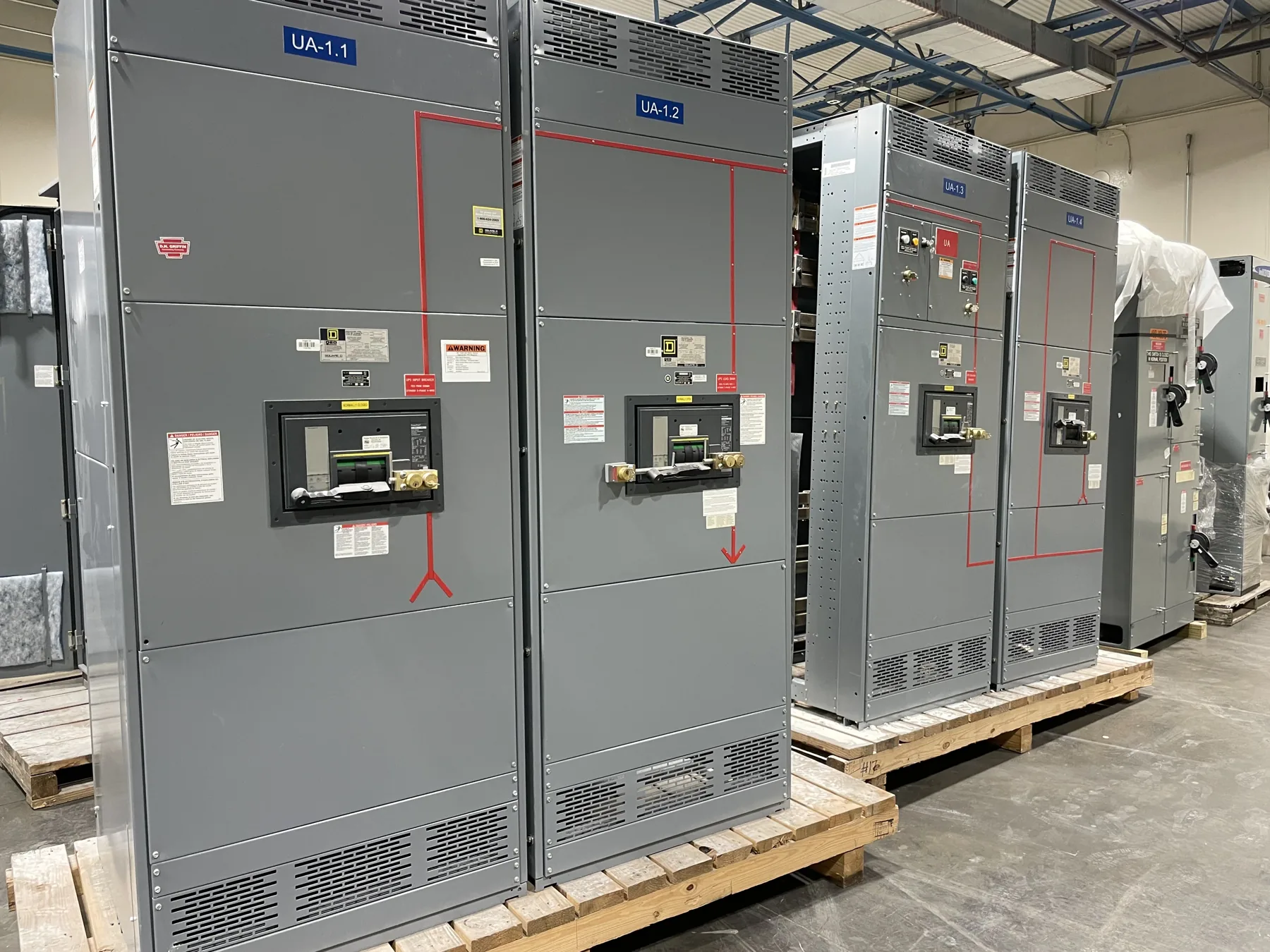
A safe exterior view of the manufacturer label can help identify Schneider-labeled switchgear. If you already have a photograph or can obtain one without approaching energized equipment, it may be shared for review. A photo is optional, and no one should open a cabinet, remove a cover, or enter a restricted area to get one.
If the voltage and current markings are safely visible, include what they say. Transcribe the markings as written rather than correcting or interpreting them. If the label is unreadable, missing, or inaccessible, describe that limitation and leave the rating unknown. The Schneider name alone does not establish a model, rating, or condition.
Available drawings can also help explain the equipment configuration, but they are not a requirement. Existing records are useful when they can be shared; sellers do not need to commission new drawings or verify them through testing. The buyer reviews the available information before deciding whether to make an offer.
Explain Condition and Configuration
Describe the number of sections or the general lineup arrangement if you know it. Note whether the equipment is still in service, has been removed from service, or is awaiting a planned shutdown. If the status is uncertain, identify it as uncertain rather than trying to determine it through physical inspection.
Mention visible exterior condition only from a safe position and based on what you already know. Existing photographs may be useful, but there is no need to create new ones if access is unsafe. Share any known missing devices or separately stored components so the buyer can understand whether the described equipment is a complete lineup or a partial group.
The point is to provide a reliable account, not to certify the equipment. Seller testing is not required. If maintenance records, drawings, or prior identification are unavailable, that does not need to be concealed; simply explain what information exists and what remains unknown.
Make Pickup Information Useful
For a possible pickup in Santa Clara, describe the equipment's location within the facility and the route toward a loading area. Known door widths, turns, floor changes, elevators, or access controls may help the buyer consider handling needs, but do not measure or investigate anything that would be unsafe or outside your authority.
Share site rules that could affect access, such as appointment procedures, restricted hours, security requirements, or limits on vehicle entry, if those are known. These facts help inform planning; they do not make the seller responsible for arranging transport. If the route is not yet known, say that it needs assessment.
If a purchase is agreed, the buyer handles and pays for crane, rigging, electrical disconnects, loading, freight, and hauling. Electrical work belongs to qualified personnel following applicable safety procedures. The seller does not need to disconnect the equipment, hire a rigging crew, or load it before asking for a review.
Send a Practical Quote Request
A focused request can include the Santa Clara location, safe exterior Schneider label information, voltage and current markings if visible, available drawings, section count, service status, and any known missing components. Add the pickup route or access restrictions when known. Existing photographs are optional; do not take a photo if reaching the equipment would be unsafe.
Mark unknown ratings, models, or dates as unknown. The buyer must review the equipment and the information before making an offer, so no specific price or purchase eligibility is promised in advance. You do not need to test the switchgear or open it to support the review.
If the purchase is agreed, payment is upfront. An offer alone does not trigger payment, and the buyer takes responsibility for the listed disconnect, rigging, loading, and transportation work at its expense. Send the information already available and ask for a review; avoid delaying an inquiry to obtain details that are unsafe or unavailable.