THE BUYER'S GUIDE / CALIFORNIA
Sell Surplus Switchgear in Pomona, CA
Describe the Equipment, Don’t Assume Its Value
A useful description of surplus switchgear is not a price estimate. It gives enough detail to understand what the equipment is and how it might be handled, while leaving its condition and potential value for review. Sellers looking to sell surplus switchgear in Pomona, CA can begin with what they know and clearly mark anything that is uncertain. Age, appearance, or a familiar manufacturer alone cannot establish a reliable value.
Switchgear differs by design, configuration, voltage class, rating, and condition. Two units that look similar may have different components or intended uses. A quote therefore depends on reviewing the available equipment information; no particular price or eligibility should be assumed before that review. You do not need to test equipment to ask for a quote.
Decommissioning and Surplus Equipment
Surplus switchgear may become available when a facility is decommissioned, a power system is replaced, or an operation shuts down. Equipment from decommissioned data centers and shut-down power plants is among the surplus equipment we buy. The circumstances can affect what information is still available: a facility may have maintenance records and drawings, while another may have only labels, photographs, or a basic inventory.
For a Pomona-area seller, explain the equipment’s context only to the extent you know it. For example, say whether it came from a facility decommissioning or a system change, and whether it is installed, disconnected, or already removed if that status is known. Do not infer an equipment history, operating condition, or remaining service life from its former use. If records are unavailable, that is useful to state rather than fill gaps with guesses.
Identify What You Have
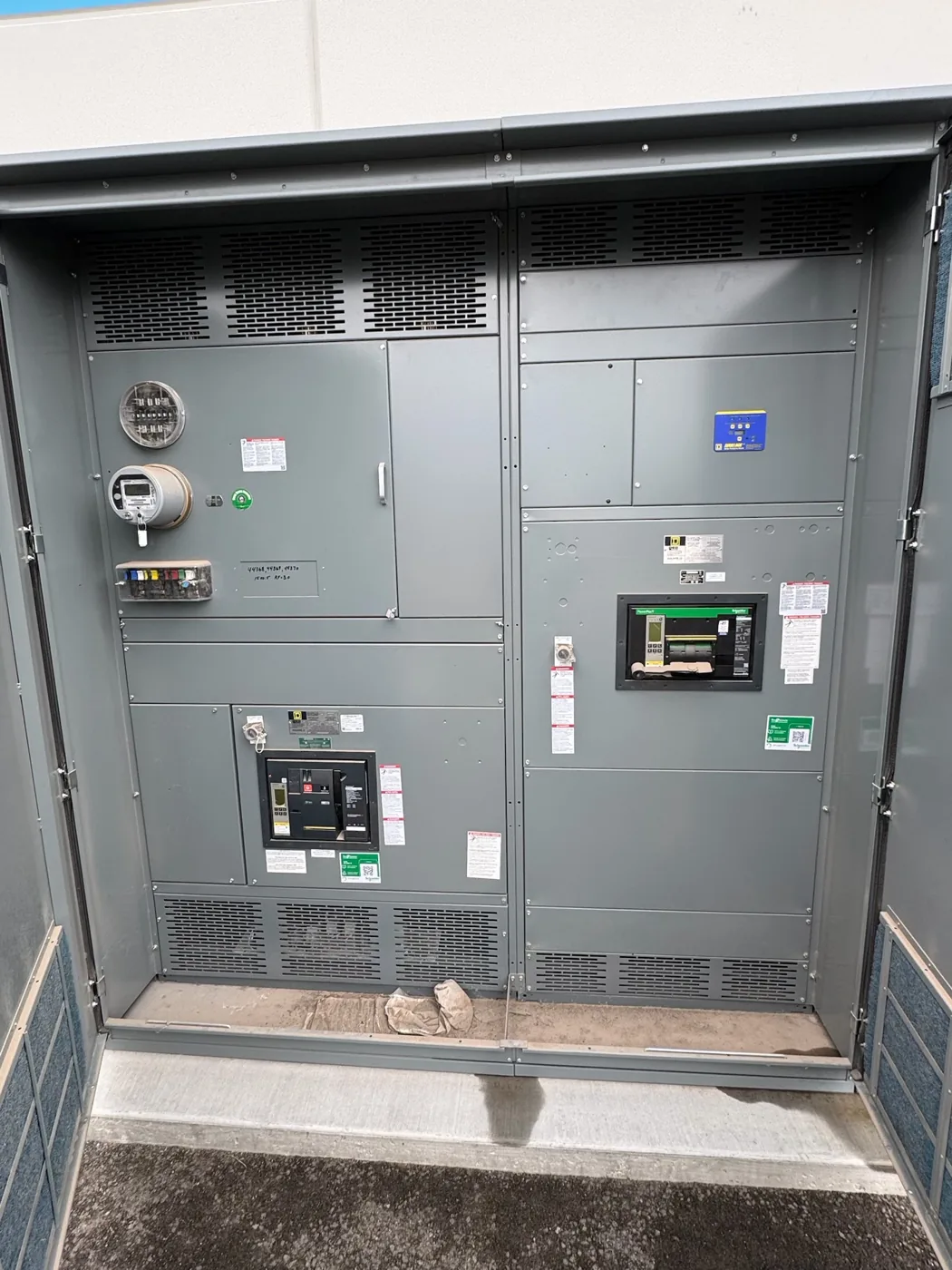
Share the manufacturer and model if they can be read, along with any visible voltage class, rating, or other nameplate information. Clear photos of the nameplate help distinguish between equipment with similar enclosures and allow details to be checked without relying on a transcription. Include broader photos showing the complete lineup or unit, its configuration, and any visible sections or associated components. Do not create or guess at nameplate data when a label is missing or unreadable.
Also describe the quantity and general condition as observed. Note whether the equipment is complete, visibly damaged, missing parts, or of unknown condition; these are descriptions, not a substitute for testing. If dimensions are known, include them, especially when a lineup has several sections or limited clearance could affect removal. Drawings, inventories, or other existing records may help clarify configuration, but you do not need to prepare new technical documents to start a conversation.
Plan Access and Pickup Coordination
Pickup planning depends on where the switchgear is and how it can be reached. Share the site location in Pomona or the surrounding area, whether the equipment remains inside a building, and any known route constraints such as narrow doors, low clearances, stairs, restricted loading areas, or limited vehicle access. Mention whether a loading area is available and whether the equipment is still connected or has already been disconnected, if you know. These details help determine the handling and coordination the equipment may require.
You do not need to arrange rigging, loading, freight, or hauling. We handle the logistics at our expense, including crane work, rigging, disconnects, loading, freight, and hauling. Electrical handling and disconnects must be performed by qualified personnel following applicable safety procedures; never attempt to work on energized equipment. Share any known access or site coordination requirements so the work can be planned appropriately.
What Affects Consideration
Review can take account of the equipment’s identification, voltage class, configuration, quantity, completeness, apparent condition, and available records. Access and removal circumstances also matter because they inform handling and logistics. These details support an informed review, but they do not guarantee a valuation or acceptance. The business buys all voltage classes, and sellers are not required to test equipment before requesting consideration.
If you are unsure whether a rating is legible, a component belongs to a particular lineup, or the equipment is complete, say so and share the photos or records you have. Separate confirmed details from estimates—for instance, identify a dimension as approximate or a condition as unknown. Clear uncertainty is more useful than presenting an unverified assumption as fact.
Request a Quote for Pomona Switchgear
To request a quote for surplus switchgear in Pomona, send the manufacturer and model if known, readable nameplate photos, any available voltage or rating details, configuration and quantity, observed condition, and approximate dimensions if available. Include the equipment’s current status and location, plus photos or a description of access, loading, and any known pickup constraints. Existing inventories or records can be included, but testing is not required.
After reviewing the information, the buyer can determine whether to make a cash offer. Payment is upfront, and the seller’s role is limited to sharing what is known and coordinating access; the buyer handles the rigging and logistics at its expense. Start with the information and images you can provide, clearly flag what remains unknown, and ask for a quote rather than assuming the equipment’s value in advance.