THE BUYER'S GUIDE / CALIFORNIA
Sell Service-Entrance Switchgear From Data Center Decommissioning in California
Data center decommissioning: we handle the work
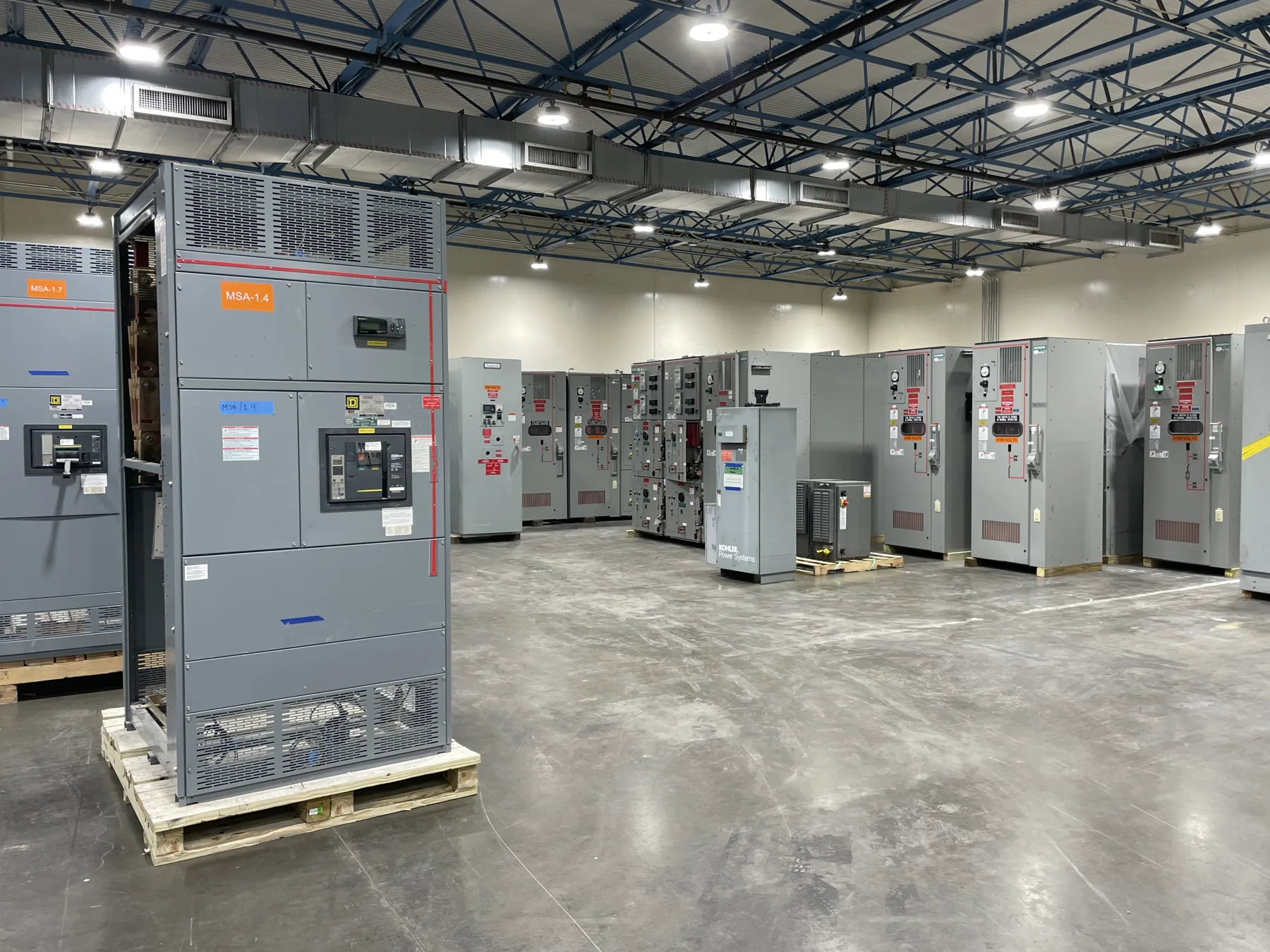
We buy electrical switchgear out of decommissioned data centers. Crane, rigging, disconnects, loading, freight and hauling are on us. The seller does nothing but get paid; qualified personnel handle the electrical work.
Build an Equipment Picture Without Testing
A seller may know that service-entrance switchgear is part of a California data center decommissioning but have incomplete information about the main section. That is enough to begin an inquiry: share what records or safely visible labels show, and make clear which details are not known.
Identify the main section as specifically as available information allows, using label or nameplate wording rather than an assumed rating or configuration. State how many sections are being offered and whether the proposed scope includes associated sections. Do not invent missing identification details to make the description appear complete.
No testing is required for a buyer to review the equipment. Do not open switchgear, approach energized equipment, or attempt to inspect connections. Existing safe exterior or nameplate photos are optional. If neither records nor safe views answer a question, report the uncertainty and let the buyer assess what further information is useful.
Connect the Sale to Decommissioning
Decommissioning often requires owners to clarify what equipment is being released and when access may be available. For a potential sale, explain whether the service-entrance switchgear is already removed, remains in place, or is expected to be released later, if that status is known.
Ownership and release authority should be clear before equipment is offered. State who can authorize the sale or identify the appropriate owner contact, without sharing assumptions about rights or utility approval. If the equipment is subject to a known release process, summarize that process as understood and note any unresolved coordination.
Utility coordination may matter for service-entrance equipment, but do not claim a particular approval is secured if it is not. Share known contacts, requirements, or timing only when confirmed. This information helps the buyer understand whether the equipment can be reviewed and how a potential transaction could be coordinated; it does not require the seller to perform electrical work.
Describe Condition and Sale Scope
Give a factual description of known condition, such as whether the switchgear is still installed, has been removed, or has visible exterior damage recorded before the inquiry. If the condition has not been assessed, state that plainly. A buyer can review a proposed purchase without a seller certifying operation.
Explain whether the offer covers the main section alone or includes other switchgear. If multiple sections are involved, list what is known about each rather than assuming that all pieces belong together. These distinctions are especially useful when decommissioning records use broad equipment labels that may not match the intended sale scope.
The seller is not asked to test or open equipment. Electrical handling and disconnects must be performed by qualified personnel following applicable safety procedures. The buyer handles and pays for disconnects if a purchase is agreed. Do not approach equipment to obtain a close-up; any safely available exterior or label photo is optional.
Plan Access and Removal Responsibilities
For an initial review, provide the California location and known access details, such as a confirmed loading restriction, site release contact, or expected access period. Share only facts the owner has verified. There is no need to map a route or estimate lifting requirements before the buyer has reviewed the equipment.
Service-entrance switchgear may require coordinated removal, but the seller does not arrange disconnects, rigging, crane service, loading, freight, or hauling. When a purchase is agreed, the buyer handles and pays for those logistics. Qualified personnel complete electrical work in accordance with applicable safety procedures.
If the switchgear remains in place, say so and identify any known decommissioning sequence or access constraint. Do not attempt to disconnect or move it. A practical account of what is accessible, who controls release, and what timing is confirmed helps the buyer consider logistics without asking the seller to take on unsafe tasks.
Send a Clear Quote Request
A focused request can include the equipment description, main-section label details, quantity, known condition, sale scope, California location, and any confirmed ownership or release coordination. Add safe exterior or existing nameplate images if available, but do not create photos by opening or approaching the switchgear.
The buyer reviews the available information before deciding whether to make an offer. A quote depends on that equipment review; an inquiry does not promise a particular value or purchase. If utility coordination or release status is unresolved, explain what is known and what remains pending rather than presenting it as complete.
If a purchase is agreed, payment is upfront, while the buyer handles and pays for disconnects, crane and rigging, loading, freight, and hauling. An offer alone does not trigger payment. Send the facts available now, identify uncertainties, and ask for a review of the service-entrance switchgear being released through the decommissioning.