THE BUYER'S GUIDE / CALIFORNIA
Sell Motor Control Centers From Power Plant Decommissioning in California
Power plant teardown: we handle the work
We buy electrical switchgear out of shut-down power plants. Crane, rigging, disconnects, loading, freight and hauling are on us. The seller does nothing but get paid; qualified personnel handle the electrical work.
Define What Is Being Released
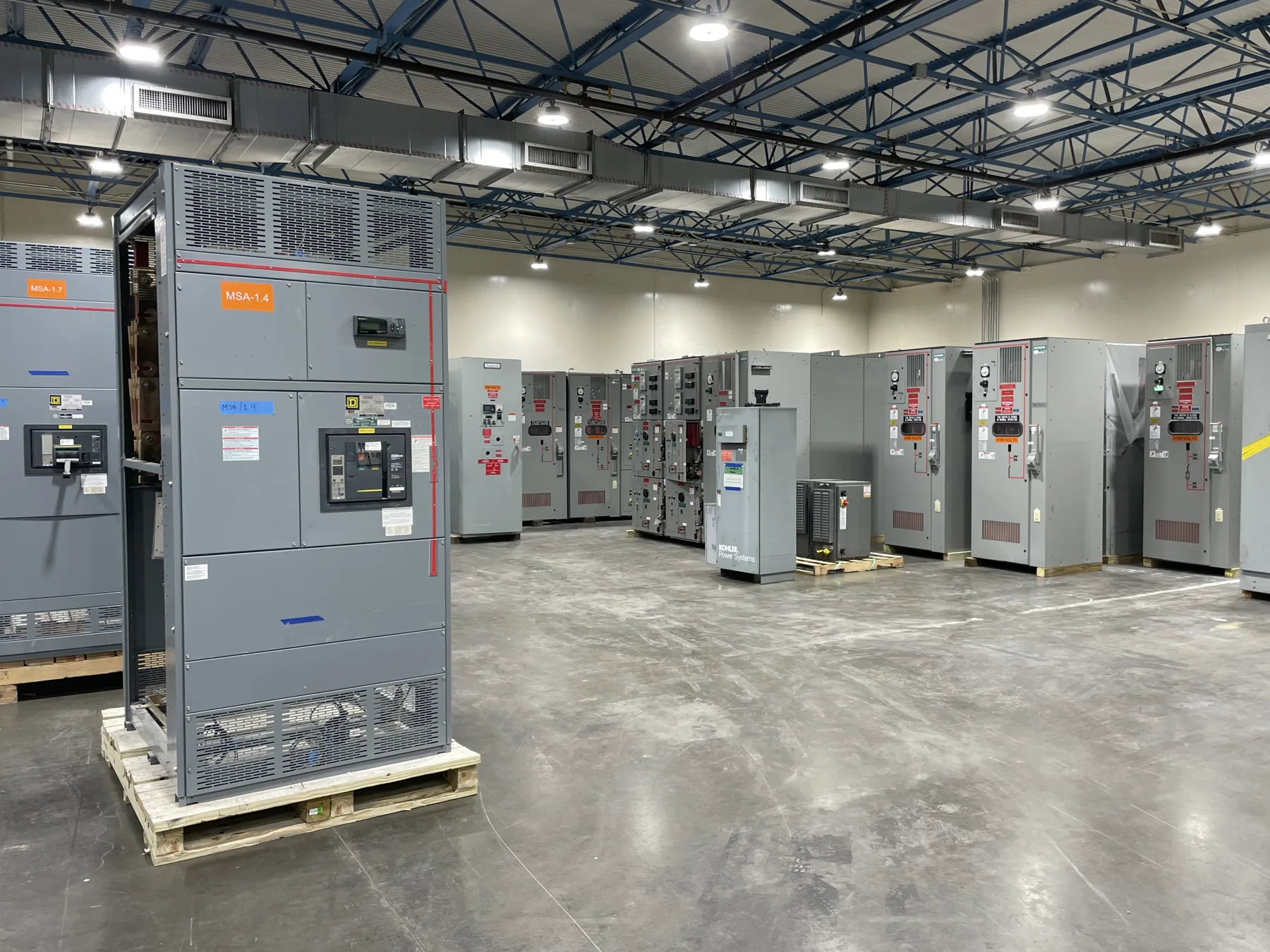
The useful description of a motor control center is not a guess about its value; it is a clear account of what the project can release. Identify each MCC lineup under consideration, then describe whether the proposed group includes the full lineup, selected sections, or individual buckets. This distinction matters because a broad equipment-room description may combine assets with different owners or release dates.
For each lineup, share the manufacturer and readable model information, along with voltage details shown on labels or in existing records. Describe buckets by count or identifiers when those can be read without disturbing equipment. Do not invent nameplate data or assume all sections and buckets match just because they appear together in the same installation.
Clarify which components are included and which will remain with the plant or another project. If a bucket is unidentified, state that rather than assigning it a type from appearance alone. A simple lineup-by-lineup description gives the buyer a usable scope for review and helps the seller avoid promising equipment that the responsible owner has not approved for release.
Share Known Condition and Records
A seller can describe the MCC's status without testing it. Say whether it remains installed, has been removed, or is in storage, and share any visible observations or documented service history that are already available. If no recent condition information exists, make that limitation clear. A request for a quote should not depend on commissioning new tests or opening electrical enclosures.
Existing schedules, diagrams, manuals, maintenance records, or photographs may help explain how sections and buckets are identified. Their value lies in clarifying the equipment and its history, not in proving present performance unless they directly document it. If labels are missing or records disagree, flag the conflict and let the buyer review the available information rather than choosing an unsupported answer.
Motor control centers can be associated with a range of plant functions, but do not infer a particular duty from a bucket's location or appearance. Share an application description only when the project records support it. Separating documented facts, visible observations, and unknowns makes an initial assessment more reliable and keeps the quote request focused on the equipment actually being offered.
Coordinate Release by Project Stage
Power plant decommissioning rarely makes every asset available at once. Describe the release sequence for each MCC lineup or group of buckets, including the shutdown milestone that controls availability. If a date is tentative, label it as a planning estimate. This lets the buyer understand whether one group can be reviewed sooner than another without treating a forecast as a firm commitment.
Confirm who owns the equipment and who has authority to approve its transfer. The person managing a project schedule may not be the person authorized to release plant assets, so identify the responsible project contact or explain how that person will be involved. If approval is pending, say so; ownership and release status affect what can properly be included in a quote.
Keep any condition or inventory information tied to the relevant lineup. If one section is scheduled for an earlier release than another, describe them separately and note whether their records or access arrangements differ. This small amount of organization avoids confusion when project milestones change and gives the buyer a clearer basis for reviewing the scope.
Prepare Access Without Electrical Work
Describe the equipment's location in California and any known constraints that affect reaching or loading it. Useful details may include the route from its current position to a loading area, available staging space, or access coordination with other contractors. Report what the project team knows; do not invent measurements or state that a route is suitable when that has not been confirmed.
Electrical disconnects and handling must be performed by qualified personnel following applicable safety procedures. Sellers must not work on energized equipment or remove buckets to prepare for a quote. The buyer handles the rigging and logistics, including crane, rigging, disconnects, loading, freight, and hauling at its expense. Early notice of access restrictions supports proper coordination without shifting the work to the seller.
If the MCC is behind controlled access or requires an escort, identify the coordination process and the person who can arrange it. Note whether the area is expected to be accessible before or after a shutdown milestone. These details help the buyer plan a review and removal discussion while respecting the site's procedures and keeping the seller's role limited to information and authorized access coordination.
Request a Quote With Useful Detail
To request a quote for motor control centers from power plant decommissioning in California, describe each lineup, the included sections and buckets, readable manufacturer and voltage information, and any known differences between groups. Include ownership status, available records, installation or storage status, and the release sequence. Mark unknown details clearly instead of filling gaps with assumptions.
Name the project contact responsible for equipment release and access, or explain how that person can be reached through the project's normal coordination process. Include shutdown milestones, expected availability dates, and practical loading constraints. Attach or offer existing documentation and photographs when authorized, but do not arrange testing; sellers are not required to test equipment for review.
A quote depends on reviewing the equipment and the information supplied, so an exact value or eligibility cannot be promised in advance. The business buys used and surplus switchgear across voltage classes, makes cash offers, and pays upfront when an agreement is reached. It handles rigging and removal logistics at its expense. The seller provides accurate scope and coordination, then gets paid.