THE BUYER'S GUIDE / CALIFORNIA
Sell Metal-Clad Switchgear From Power Plant Teardown in California
Power plant teardown: we handle the work
We buy electrical switchgear out of shut-down power plants. Crane, rigging, disconnects, loading, freight and hauling are on us. The seller does nothing but get paid; qualified personnel handle the electrical work.
Identify the Lineup Before Discussing Freight
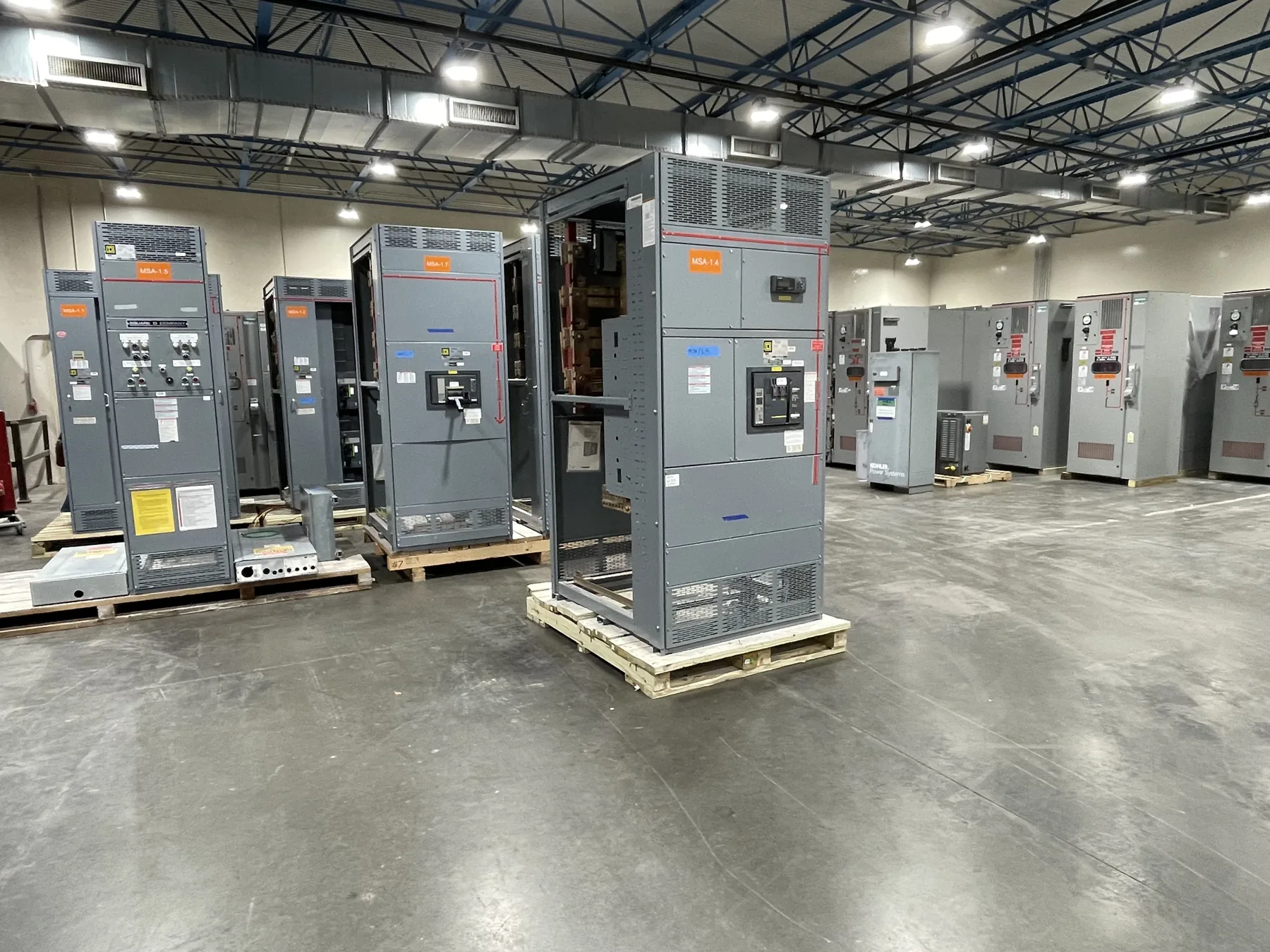
When metal-clad switchgear is included in a power plant teardown, the first useful task is to define the equipment being offered. To sell metal-clad switchgear from power plant teardown in California, start with the lineup itself: how many sections are included, what breaker types are documented, and whether the lineup remains intact.
Those details help a buyer review the proposed scope before freight or lifting arrangements are considered. A lineup may be offered as a whole or as selected sections, and adjacent equipment may not be part of the same sale. State what the owner intends to include, and flag any boundary that is still uncertain rather than treating the entire room as one asset.
A quote depends on reviewing the equipment, but no seller testing is required. Do not approach or open energized gear to identify breakers or labels. Electrical handling and disconnects belong to qualified personnel following applicable safety procedures. Existing exterior or nameplate photos are optional when safely available; no photo is needed if getting one would create a risk.
Record Sections, Breakers, and Labels
The number of sections is a practical starting point because it gives a reviewer a basic picture of the lineup’s scale and completeness. If a drawing or inventory already records the section arrangement, share it if convenient. If not, a simple count based on information safely available is useful, with any uncertainty clearly noted.
Breaker types and accessible labels can help identify what is included, but do not create new access to obtain them. Share details from existing records or labels visible from a safe location. If label information cannot be read without approaching, opening, or interacting with equipment, leave it out and explain that it is unavailable.
Whether the lineup is intact also matters to the scope. Tell the buyer if sections or breakers are known to have been removed, if the offering is partial, or if the owner has not confirmed completeness. This is more helpful than assuming components are present. A reviewer can ask for clarification after considering the available description and records.
Describe Condition and Site Timing
For condition, report what is already known from ordinary records or safe observation. A seller might mention visible exterior damage, missing sections, or uncertainty about the lineup’s current status. Avoid presenting assumptions as test results. There is no need to energize, operate, or test breakers to make a quote request.
The teardown context can help explain why the switchgear is available and whether removal is part of a broader site change. Share only timing details the owner knows, such as an anticipated access period or a schedule that has not yet been finalized. A buyer should not be expected to infer a deadline from the word teardown alone.
Provide the California location and any known site access conditions that could affect a later removal discussion. Examples include controlled entry or a restricted loading route, if the owner already knows those facts. Do not invent equipment weights, lifting points, or clearances. If these details are not documented, state that they remain to be determined.
Leave Electrical and Rigging Work to the Buyer
Metal-clad switchgear can require coordinated planning to remove, but the seller does not have to arrange that work. If a purchase is agreed, the buyer handles and pays for electrical disconnects, crane service, rigging, loading, freight, and hauling. Qualified personnel perform electrical work in accordance with applicable safety procedures.
Do not approach energized equipment or open cabinets for an inspection. If electrical status is uncertain, state that uncertainty and let qualified personnel address it. The seller is not asked to test the lineup, disconnect conductors, prepare breakers, or select lifting equipment as a condition of requesting a quote.
Known logistics information can still be useful. Share what is already established about access, site rules, loading areas, and available timing, without promising that a route or lifting approach will work. The buyer can review those facts alongside the lineup description and determine what follow-up is appropriate if the proposed purchase moves forward.
Send a Specific Quote Request
A focused request can state the number of metal-clad sections, breaker types and label information that are safely accessible, and whether the lineup is believed to be intact. Include the condition as known, the site location in California, and any existing records or safe exterior photos that help show the offering. Unknown details can remain unknown.
Explain that the equipment comes from a power plant teardown and identify which sections or breakers are being offered. Mention any known timing or access limits, but do not arrange electrical disconnects or lifting. The buyer reviews the details before making an offer, so an initial inquiry should not be treated as a guaranteed valuation or confirmation of eligibility.
If both parties agree to a purchase, payment is upfront, while the buyer handles and pays for removal logistics, including rigging and freight. An offer alone does not trigger payment. To begin, share an accurate description and respond to reasonable questions using existing information; no testing, interior access, or unsafe photography is required.