THE BUYER'S GUIDE / CALIFORNIA
Sell Electrical Equipment From Hospital Closure in California
Separate closure surplus from equipment still needed
A hospital closure may make electrical equipment available in stages rather than as a single lot. Switchgear and distribution equipment can remain connected to areas that are still occupied or support other site functions, even as the wider property changes use. When planning a sale in California, identify the equipment that the responsible facility team expects to release and distinguish it from assets that must remain in place.
We buy used and surplus electrical equipment, including switchgear, from closure projects. Describe what is available after the project and flag items whose disposition or release date is not yet confirmed. A room name, equipment tag or existing inventory entry can help distinguish a proposed sale item from nearby equipment that is not included. If a different organization controls a neighboring wing or shared service, flag that relationship rather than assuming the available equipment belongs to the seller. You do not need to settle every detail before asking for a review.
Build a useful description from existing information
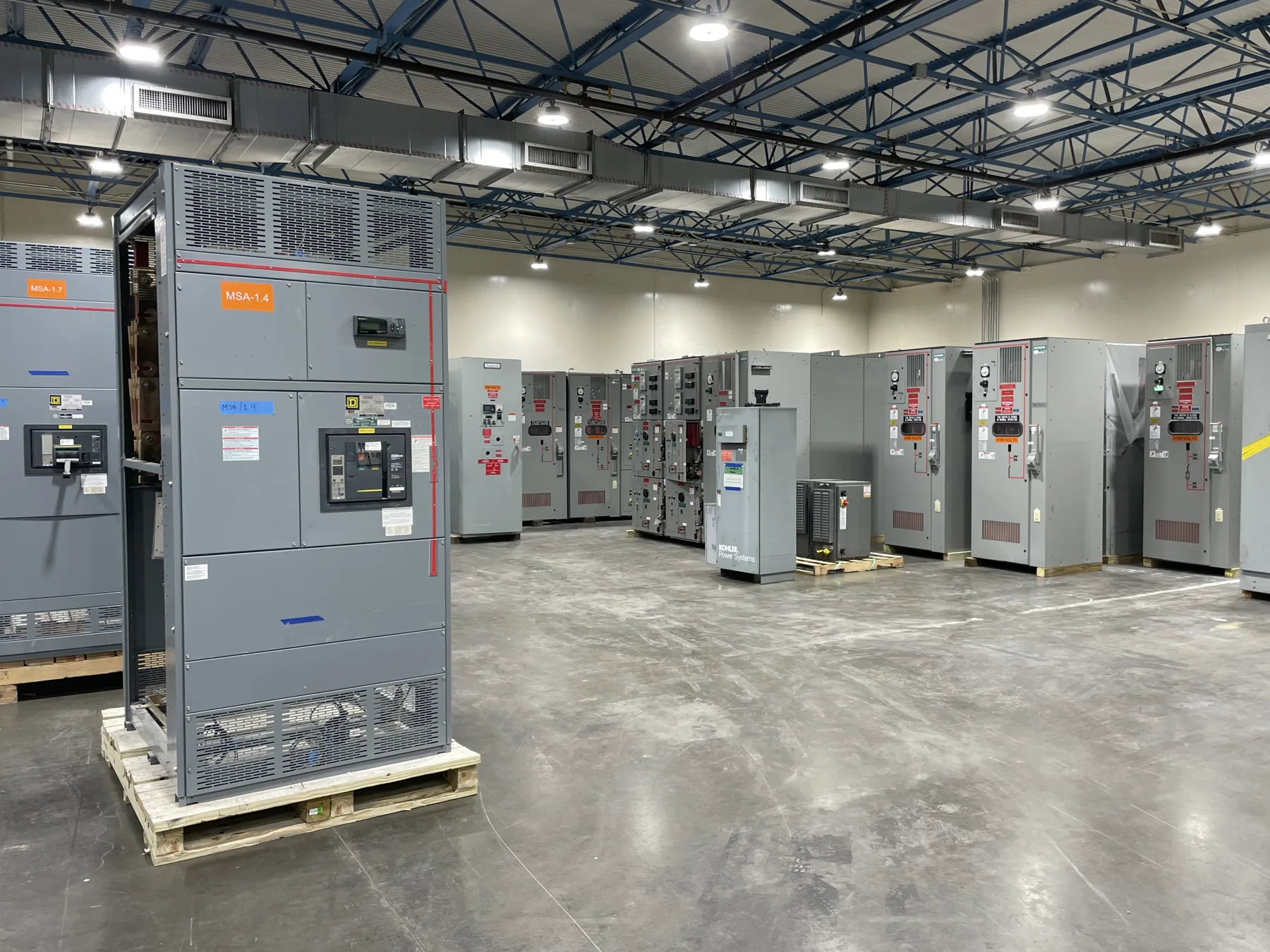
An inventory might include switchboards, circuit breakers, transformers, transfer switches or related distribution equipment. Identify each item or lineup separately where practical and note the quantity and manufacturer, model, voltage class and ratings if known. Overall photographs can show the configuration, while readable nameplates can help match an item to an existing record. We consider equipment in all voltage classes.
Share the known condition and whether the equipment is installed, stored or already disconnected. If a lineup is incomplete or an accessory is being retained, mention that distinction so the scope is not misunderstood. Existing drawings or maintenance records can add context, but you can leave missing details unknown. We do not require sellers to test or operate equipment to request a cash offer.
Account for a healthcare site's access restrictions
The removal route can be as important to planning as the equipment's location. A unit in a basement electrical room presents different access questions from one in a ground-level loading area. Share any known door, corridor, elevator, loading dock or vehicle restrictions, along with the approximate location and dimensions of the equipment. Existing photos of the route can help explain obstacles without requiring the seller to arrange transport.
Tell us about site entry procedures, escort requirements, work-hour limitations or other restrictions known to the project team. Where adjacent areas are still occupied, identify any boundaries or scheduling constraints that could affect access. If access changes as other rooms are cleared, note which route information is current and which is only a preliminary expectation. Avoid sending patient information or unrelated sensitive records with equipment photos. The aim is to describe the route and site rules, not to expose private hospital information.
Coordinate the handoff around the closure
The facility owner, closure team and contractors may have separate responsibilities for approving a sale, scheduling access and releasing equipment. Identify the person authorized to sell and the project contact who can coordinate timing. If equipment is being released in phases, describe those phases and any known dependencies, including work that must be completed before the equipment can be made available.
We handle and pay for all rigging and logistics, including crane, rigging, disconnects, loading, freight and hauling. Electrical work belongs to qualified personnel following applicable safety procedures. Sellers should not disconnect, operate or open equipment to prepare it for a quote. Coordinating with the appropriate site contacts helps establish when the buyer's removal work can be planned alongside remaining closure activity.
Send the details for a cash offer
To request a quote, share the California location, a description or existing inventory of the equipment, available photos, known ratings and condition, and any expected release window. Include known access restrictions and identify the authorized sale contact. If the closure schedule or sale scope is still being resolved, say what is confirmed and what remains uncertain instead of guessing.
We review each proposed lot and make cash offers, paying upfront. A specific price or purchase cannot be promised before review. The service is a purchase of surplus equipment, with the removal and transportation handled at our expense rather than by the seller. We also buy electrical equipment from decommissioned data centers and shut-down power plants, as well as equipment made surplus by hospital closures.